
Transitioning to Secondary
Kristi Antczak and Lorna McGrath each have two children who have moved to Secondary programs. In this session they will each talk to you about their experiences with this important transition for their children. They will give you tips for smooth transitions, pitfalls that may happen, and choices to be made. You’ll want to attend this session whether your child is moving into a Montessori Secondary program or a more conventional education program.

Book Review: A Very Large Expanse of Sea
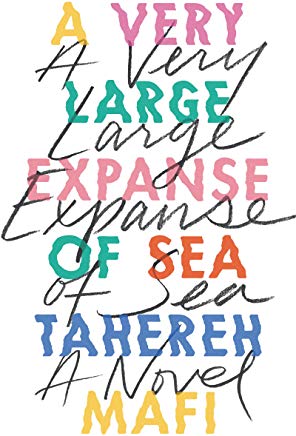 A Very Large Expanse of Sea
by Tahereh Mafi
Set in 2002, a year after the tragedy of 9/11, A Very Large Expanse of Sea is a novel with willful political significance. Author Tahereh Mafi tries very hard to bridge a gap between two people who theoretically come from different worlds. She does this through the eyes of Shirin, a Persian girl who hates the world for the discrimination and racism she is forced to live through. Shirin’s life changes as she comes across Ocean, a mysterious boy who gravitates towards her. A Very Large Expanse of Sea is at its best when it compares and contrasts two different cultures, but downright cringe-worthy as a love story.
Shirin, portrayed as a relatable teenage girl, is confused about the world’s unethical and racist qualities. She shows her emotion through hatred of the people around her. Shirin’s hatred feels more like a direct consequence of the environment she’s immersed in, and not a reflection of her actual personality. Through her journey, Shirin learns that not everyone is as despicable, racist, or unethical as she thinks: some people are just as lost as she. This story mainly takes place in high school, the perfect place to showcase discrimination against Muslims.
Now we enter the book’s biggest problem: Ocean. Shirin meets Ocean in one of her classes, and they become friends. Shirin is a complicated human being; Ocean, on the other hand, is inherently one dimensional. Mafi never describes Ocean more to us than, the boy who “smells nice.” Ocean does, however, carry a family burden that I won’t spoil for you, but even with it, I feel this story fails to capture his personal essence. Shirin and Ocean have little chemistry between them. Normal two-way conversations are awkward and repetitive, due to both of these characters’ “yes” and “no” conversational skills. This relationship is, however, intriguing when they communicate like people from vastly different places in the world. For example, Ocean thought he ate Persian food regularly, but Shirin told him otherwise. It’s conversations like these that make their romance something worth paying attention to.
A small but charming part of this novel is breakdancing. Shirin loves to breakdance with her brother, Navid, and his friends. Breakdancing is a small sport, and I’m happy it got the recognition it deserves. Shirin and Ocean are 15 and 16, which makes this book perfect for ages in the teen years. A Very Large Expanse of Sea is a short but charming novel that doesn’t deserve to sell you on its romance, but its unique main character, Shirin, and her growth as a person. How would you fair in Shirin’s position?
Reviewed by Liam Agnew, 10th grade,
NewGate School, Sarasota, FL
Tomorrow’s Child/ April 2019 / Pg 30

63 Fun Questions to Get Your Kid Talking
Children ask questions—lots of questions. But you can turn the tables! Here are 63 fun suggestions to get a conversation started.
Kids ask a lot of questions. Sometimes the questions repeat themselves. Most of the time we’ve answered them over and over. And let’s be honest, we’ve been known to ignore one or two here and there or do an internal eye-roll over the constant barrage of why’s and how’s. To be fair, studies have shown that young children ask over 300 questions each day—and so we can’t really be expected to answer all of them. (Right?)
But here’s the thing, kids should actually be encouraged to ask more questions—not fewer! (I know, you want to stop reading right now, because, why?! How?!) Turns out there’s a very good reason: When you answer your child’s questions, you help keep your child’s mind open, says author and parenting expert Michele Borba, Ed.D., Plus, she adds, “You’re modeling what a good question looks and sounds like.”
It’s important that we let kids know their imagination—and desire to know more—is a wonderful thing, and it turns out we can help achieve this not just by answering our kids’ many questions, but by making a point to ask them just as many questions in return. After all, it’s proven that kids mimic the words, patterns, routines, and behavior of their parents.
So move beyond the basic “How was your day?” and consider this list of 63 questions to help get your kids talking:
01. What do you like daydreaming about?
02. What makes you happy?
03. What have your friends been up to?
04. If you could do anything right now, what would you do?
05. What do you look forward to when you wake up?
06. Do you ever think about renaming the colors of your crayons?
07. What character makes you laugh the most?
08. If you opened a store, what would you sell?
09. What’s your Superhero name and what powers do you have?
10. You’re at the beach. What’s the first thing you do?
11. If you could grow anything in the yard, what would it be?
12. What makes you feel brave?
13. What makes you feel loved?
14. How do you show people you care?
15. What does it feel like when I hug you?
16. If your stuffed animals could talk, what would they say?
17. If you could give $100 to a charity, which would you choose?
18. How would you design a treehouse?
19. What do you enjoy giving people?
20. Did you smile or laugh extra today?
21. If you wrote a book, what would it be about?
22. If you drew everything that came to your head, what would you be drawing right now?
23. If you designed clothes, what would they look like?
24. How do you best like helping others?
25. Pretend you’re a chef, and tell me about your restaurant. What foods do you serve?
26. What do you think you’re going to dream about tonight?
27. What makes you feel thankful?
28. Where would you like to travel? How would you get there?
29. What sounds do you like?
30. If you made a cave in the woods, what would be inside it?
31. If you could ask a wild animal any question, what would you ask?
32. You’re outside for a whole day: what would you do?
33. What makes the best fort?
34. What makes you feel energized?
35. If you were in a play, what would your character be like?
36. How do you think animals communicate?
37. What are some of the best things about nature?
38. You’re a photographer for a day, what would you take pictures of?
39. What’s a memory that makes you happy?
40. What bugs you?
41. Describe a great day. What are you doing that makes it special?
42. What animal would make a great driver?
43. What makes your friends so awesome?
44. What makes you so awesome?
45. Do you have any inventions in your brain?
46. Do you think it’d be fun to learn another language?
47. What are the three things you want to do this summer?
48. If you could make up a new holiday, what would it be?
49. What makes someone smart?
50. If you had friends all over the world, how would you keep in touch?
51. If you had a pet dragon, what would you name it?
52. What would you do together?
53. Do you like it when other people share with you? Why?
54. If you joined the circus, what would your circus act be?
55. If you were a teacher and could teach your students anything at all, what would you teach them?
56. What is the craziest thing you’ve ever eaten?
57. Come up with three silly new traditions for the world. Or for aliens on another planet!
58. Who is your favorite storybook character?
59. What one thing do you do now that you need an adult for but would like to try to do all by yourself?
60. If a friend asks you to keep a secret that you don’t feel comfortable keeping, what would you do?
61. If you had to give everyone in the family new names, what would they be?
62. What would you do if you made the rules at home?
63. Tell me something about you that you think I might not know.
Tomorrow’s Child / April 2019 / Pg 16
Montessori and STEAM Education
In this session Sue Fitzpatrick discusses each of the six interconnected components of STEM that in 2016 the US Department of Education described as key to putting the program into classrooms. She gives actual photos and examples of Montessori students in action for each of the components. Participants will go away with lots more information about STEAM and a better understanding of its goals and how it fits with Montessori.
Value and Values of Montessori in the 21st Century
What kinds of life skills will your child need to be successful – happy, healthy, and productive – in the 21st century? Beyond facts, figures, and formulas, what will young people need to know to find their way and make their mark in a world which increasingly demands higher order thinking, social intelligence, and self-organizing abilities? In this workshop for parents Jonathan Wolff, international Montessori consultant, teacher and school leadership educator, will illustrate how the Montessori Method not only produces capable scholars, but more importantly, empowers young people to think for themselves, think of others, and think out-of-the box.
Grandparenting Terrific Teens!
Sometimes grandparents find it difficult to plan time together with older grandchildren because of the children’s (and family’s) busy schedule, discomfort about how to connect with children from this the technological age, or not knowing exactly what to do to engage them. We want to assure you that the bond created between you and your grandchildren and your ongoing unconditional love is more than enough. Simply spending time, listening, sharing families stories, and sharing life experience stories are all good. They really want hands on experiences with real people, especially you – like changing the oil on the car, doing needle work of some sort, planning the next family celebration, cooking together, getting out in nature on land or water, fixing the computer, teaching you something about the phone or computer, etc. Kathy and Margot have a lot to share!

Thoughts on the New Year
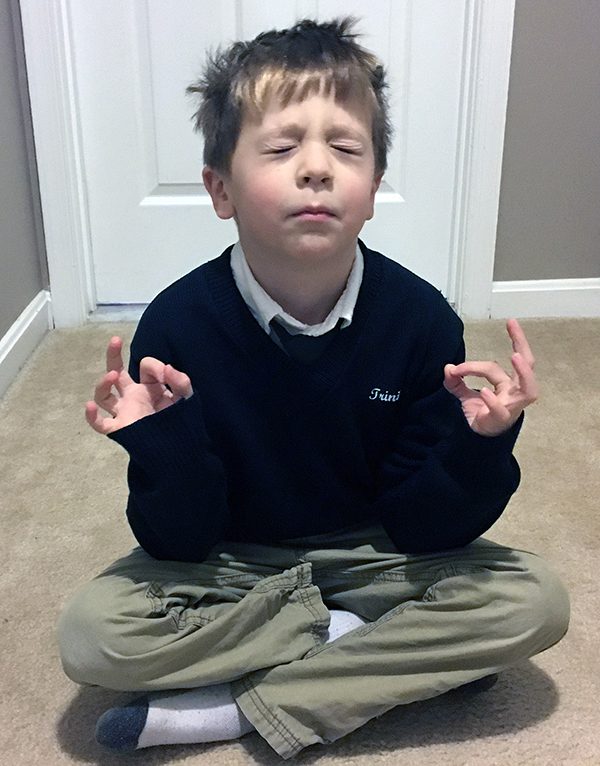 If we have no peace, it is because we have forgotten that we belong to each other.”
—Mother Teresa
Out with the old; in with the new—year, that is.
What will be different this year, this week, this day, or this moment?
If you feel like you’ve fallen down the rabbit hole and, like Alice, you are trying to make sense of an alternate reality, you are not alone. Paradigm shifts are taking place so fast, it’s hard to keep our footing.
A Taoist parable teaches: “Good and bad; it’s all the same.”
Since we can’t see the future, it’s only possible to guess how what we are doing now will impact our world in years to come. Perhaps we ‘need’ to experience the ‘bad’ to appreciate the ‘good’ that would not have come to fruition without the impetus of the ‘bad.’ While that totally seems messed up, I have come to the conclusion that it is completely impossible for our human brains to reason or rationalize what I can only describe as the spiritual algorithm of life on planet Earth.
If we can’t see the future and we can’t change the past, all we have is now and an upcoming year of opportunities to be more mindful of what we are doing to our planet, our fellow humans, and, most importantly, the children who look to us for guidance.
When children are young, what they want the most is your attention. When they grow older, what they need the most is your attention. If they cannot receive what only you have to offer, they will seek out other ways to learn life lessons. That would be a loss not only to your children but for all of us who look to the next generation for leadership.
So … when you are with your children, honor the moment that will never come again. Whatever else is happening can wait.
Peace,
Joyce St. Giermaine
Editor, Tomorrow’s Child, and Montessori Leadership
Do’s and Don’ts to Get Your Adolescent Talking
“I haven’t talked to my mom, I mean really talked, in six months,” a twelve year-old confided in me. “Oh, why is that,” I asked gingerly. “My mom laughed at me when I told her I had a boyfriend.” Sometimes we forget how sensitive children at this stage of development can be. Yet now, more than ever is the time to be available to your child. Despite all of their attempts to push you away, they still need you. Kathryn will share tips for getting and keeping your adolescents talking.
Webcast: How Montessori Builds Brains And Why It Matters
Webcast: Building Brains With Kathy Leitch and Michael Dorer
Book Review: Phasma By Delliah S. Dawson
Phasma- by Delilah S. Dawson
Phasma is an absolute must-read for any fan of the Star Wars franchise. An extremely well-written and engaging read, this book answers many of the burning questions relating to the titular character left unanswered in Episodes VII and VIII.
A captured resistance spy tells the story of the First Order’s most formidable soldier during an interrogation, which instantly makes for an interesting narrative. The spy then goes on to tell the tale in the perspective of, not the chrome-armored Phasma herself, but one of the stormtrooper’s clanmates. Through the eyes of this clanmate, the reader experiences first-hand Phasma’s bloody rise to power.
Dawson’s writing is perfect for this somewhat grim novel. Descriptive, while not flowery or poetic, she moves the story along very nicely. It draws readers in and does not let them go until they have read everything. Phasma is an extremely entertaining chapter in the Star Wars saga, which I highly recommend to all fans.
Reviewed by Emilia Kelly, 9th grade, NewGate Montessori IB School, Sarasota, FL
Tomorrow’s Child / Nov 2018 / Pg 30
Book Review: That Was Then,This Is Now- By By S.E. Hinton
That Was Then, This Is Now–by By S.E. Hinton
I would like to start off by admitting that I am a little biased towards S.E. Hinton. I have never read a book of hers that I did not love, my favorite being The Outsiders. Her stories of friendship, heartache, bravery, and love will leave you wanting more. That Was Then, This is Now is no exception.
This story delves into the lives of Mark and Bryon, two best friends who have grown up together and are inseparable. They run around, wreaking havoc, and doing whatever they please. As they get older, though, Bryon starts to see their rebellious ways as immature, and he begins to discover who he wants to be and who he might want to be with. Unfortunately, Mark remains as a carefree individual, and they both feel themselves drifting apart. They try to hang on, but when Mark is discovered to have done a terrible thing, Bryon is burdened with a decision to potentially ruin Mark’s life, and their friendship, or to let him get away with ruining the lives of others.
After reading this book, I had an ache in my chest, because I felt for the characters so deeply. In S.E. Hinton’s writings, she never fails to make one understand, love, or hate a character. The character Bryon is described as a tough, yet caring, individual, and in scenes with Mark towards the end, you can feel his pain through her words. The characters are believable, the situations tragic, yet never dull, and It doesn’t hurt that the movies follow the plots of the books to a “t.”
Another thing I enjoyed immensely was the connection she made between the characters in The Outsiders, and the characters in That Was Then, This is Now. Originally, Curly Shepard, a member of Tim Shepard’s gang, and his younger brother are enemies of Bryon’s. They get in a fight, and all though a negative encounter, this opens the gate for a fantastic crossover. During a dance, Ponyboy Curtis is introduced as one of Marks friends, but he quickly becomes the main character when helping Bryon during a fight, and then discussing his affection for Bryon’s love interest, Cathy.
It makes me so happy when my favorite characters enter a book unexpectedly and help create an even more exciting plot. It is nice to know what happened to them after their original story and see how they fit into the new one. Hinton’s introduction helped answer a few questions leftover from The Outsiders.
Overall, That Was Then, This is Now is a fantastically written novel that will leave you feeling sad, curious for the future of the characters, and wanting more. S.E Hinton keeps the struggles of friendship real while putting an unusual and dark, yet exciting, spin on her usual gang-related stories.
Reviewed by Cason Faris, 10th grade, NewGate School, FL
Tomorrow’s Child / Nov 2018 / Pg 30
My Montessori Journey
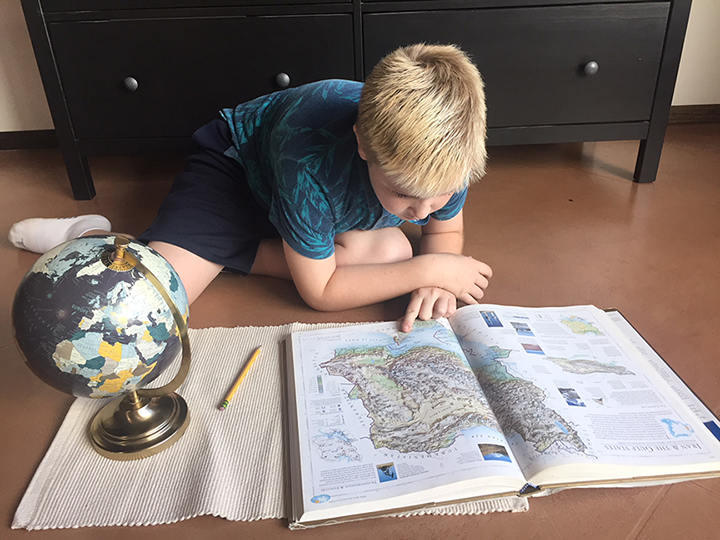 As parents, we all want the best education for our children. But what does that mean? What does that look like? For me, it means having access to the teachings and philosophy of Dr. Maria Montessori.
We have three children, ages 10, 7, and 4. They are all unique; all with their own personalities, special gifts, and needs. As a child, I attended public school the whole way through, while my husband is the product of both public and private education. We both went on to higher education and will encourage our children to do the same. I am a traditionally trained teacher and taught for many years in a general classroom. I was successful, by everyday standards and felt good about the work I was doing. As young parents, we deliberately took to methods which promoted independence in our children. And then, everything changed in 2013. Big questions came bubbling up when our middle child turned 2.
On a whim, we placed our daughter in a well-known, established AMI Montessori classroom. I was skeptical, but figured it is “just preschool,” and we can always move her after a year if we don’t like it. Little did we know that this one leap of faith would end up profoundly affecting the entire family, and in a very short amount of time.
As an educator and a parent, I wanted to understand this new method. Come to find out—at all of those free parent education nights I couldn’t get enough of—I learned the Montessori Method is over 100 years old. Wow! How could one teaching philosophy withstand the test of time like that? As a teacher, I had grown accustomed to being trained, almost yearly, on a new math or reading program. I had to learn more.
Over the course of our daughter’s first year in Montessori, we were expecting our third child, moving our oldest (then age 6) over to the Montessori school to join his sister, and I was offered a job. Constantly comparing what our son was receiving in his traditional first grade classroom to what our now 3-year-old daughter was learning about at the Primary level (the continents, exchanging big numbers using the bank game, learning cursive with sandpaper letters, how to arrange flowers, just to name a few), I soon realized our children’s experiences were at opposite ends of the spectrum. Not shy with my awe and admiration with what I was observing through my children and all over the Montessori school, I was subsequently asked to be the assistant teacher in an ever-growing Upper Elementary classroom for the following school year.
In many ways, I was starting over, learning a new trade and craft. Many would ask, “You are going back to being an assistant when you have taught for so many years?” Or, “How different can Montessori truly be from Traditional?” Yes, I was going back. I was going back to learn. To start over, in many ways. And yes, Montessori is different than Traditional. Truly different.
I have the opportunity, at this stage in my career to follow what ‘speaks’ to me. I have found a teaching philosophy (a life philosophy) that honors and respects the developing brain of the child. It is a philosophy that understands how to cultivate lifelong learners, independent thinkers, and socially aware citizens of the world.
Shifting my mindset from being at the center, up front, and in control to humbly bringing it back to the child is my new mission. Now working on my Montessori Certification at the Elementary level and relentlessly searching for a place where our three children can be immersed in the Montessori community (and for as long as possible) is my mission. Helping others see the beauty and genuine remarkability of the Montessori Method is my mission. It is as if my entire universe stems out from here and will continue to guide us.
Children are OUR teachers, not the other way around. Children will tell us what they need and where their interests lay. They have questions about the world around them and how they might find a solution to a community, national, or global problem. It is our job as educators (as adults) to observe our children, to step out of their way, and to listen.
Today, I consider myself a budding Montessorian with still much to learn. And while I don’t know where this journey will lead, I know I am on the right path.
Tomorrow’s Child / Nov 2018 / Pg 29

Would You Ask Parents if They Own Guns before Okaying a Playdate?
We ask about pets, allergies, and car seats, but would we hesitate to ask the parents of our child’s playdate if there are guns in their home?
 When my daughter was 3, she saw her first toy gun on a playdate. It was neon green and shot balls instead of bullets, but it was the first time she had ever seen or heard anything that contained the word “gun” in its description.
“What does a real gun look like?” she asked when she returned from the playdate.
I realized then that it was time to educate her, as well as myself.
I went online and showed her pictures of all different types of guns. But I didn’t stop there. I talked to her about what to do if she went to a house with a real gun—to stop, immediately leave the room, and find a grown-up. I used a stern voice, told her of the terrible things that could happen, and I did my best to answer all her questions openly and honestly.
But then she said something that I wasn’t prepared to hear: “I don’t want to play at a house that has guns.” And the truth was, neither did I.
We are not gun owners. We are a family who understands the need for guns for hunting and armed forces, but we are not people who believe they should be kept in the home for recreation or protection. I have never understood how guns could even be used for protection if they’re supposed to be kept locked up with the bullets in a separate location. If an intruder entered your home, how would you have time to unlock, assemble, load, etc.?
But a bigger question I wondered was why I had never asked a playdate’s parent if they owned guns. Yes, I knew the people she was playing with; they were friends. But the truth was, I had no idea if they owned a gun. It’s not a topic that had ever come up.
So the next time she went on a playdate, I asked the question that felt so uncomfortable coming out of my mouth, and I was surprised by their reaction. They smiled, said “ no,” and added, “That’s a good question to ask. I never thought to ask someone that.”
And that parent and I aren’t the only ones who hadn’t thought to ask before. I posted the question on Facebook and was surprised by how many mothers answered that they wished they asked if there was a gun but never did. Many were afraid of offending the other parent, or others didn’t think of asking until after the fact. However, a few said they had asked and the reactions were mixed.
A mother of two from New Jersey said that she worked up the courage to ask when her son started attending a new school. “I didn’t know the parents, and although they seemed nice enough, I felt strange about dropping my kid off at someone’s house without knowing them. I asked if they had a gun in their house, and the father answered ‘no.’ It then led to a great conversation about how sad it was that we needed to ask.”
But another mother of three from Wisconsin has often experienced a different reaction. “Almost always, parents get offended when I ask. I live in a state with many hunters. But, I put my child’s safety before a fear of how people think of me. If they don’t lock their guns, my son doesn’t go.”
Some parents are even going as far as not partaking in at-home playdates. A mother of three from New York City, slowly started eliminating playdates that take place in someone’s house. “There are too many wild cards: guns, not knowing whether other adults are in the home, and the like. I don’t consider myself a paranoid parent, but I’d rather eliminate any controllable dangers by being present and engaged and available for my child while she has a playdate. Instead, we invite our daughter’s friends (and parents, if they so choose) to join us at museums, kids’ centers, or similar spots to play.”
After recent youth shootings, access to weapons in homes is a growing concern. According to the Brady Campaign to Prevent Gun Violence, more than 40 percent of households with guns and children store their weapons unlocked.
With that information in mind, how can I truly believe someone if they tell me they properly store their guns? Not only am I a skeptic and cynical human being, but I’m also a mother who is terrified of a gun going off and injuring, or worse, killing an innocent child, especially mine.
After I showed my daughter the pictures of real guns, she asked, “How will I know what is a play gun and what is a real gun?” I wondered the same. Toys today look so real. How would she tell the difference?
In that same Brady report, parents who said that their kids had never handled their guns at home were given quite a surprise when they found out 22 percent of their children, who were questioned separately from their parents, said that they had handled their parents’ guns without their knowledge.
Who’s to say that one of those children in that 22 percent isn’t my child’s new playdate?
Retrieved from:
https://www.parenting.com/child/safety/would-you-ask-parents-if-they-own-guns-okaying-playdate
Tomorrow’s Child / Nov 2018 / Pg 24
International Festival At International Montessori School
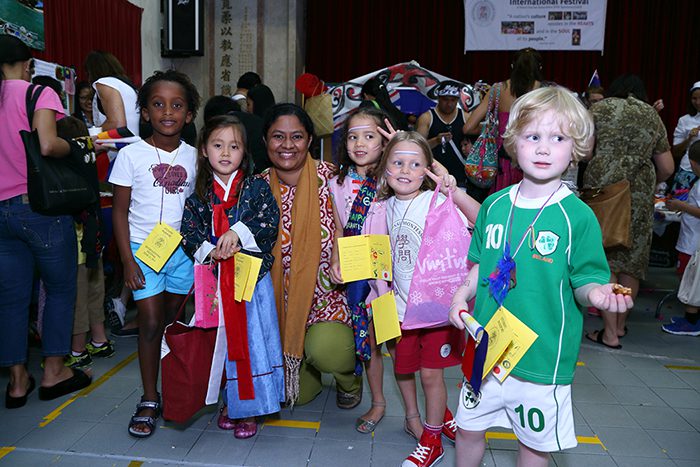
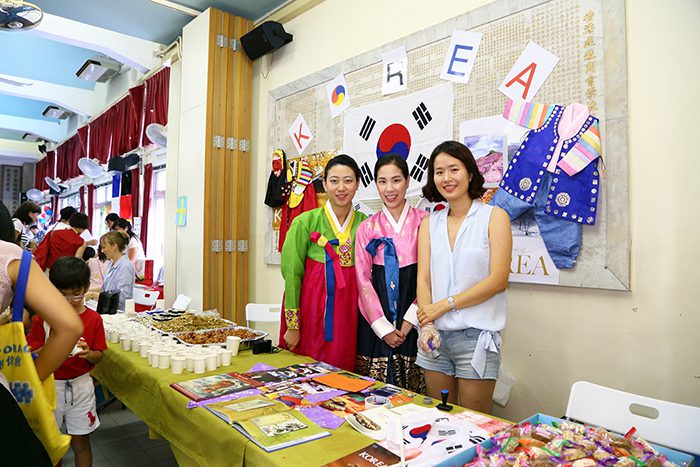 Each June, the IMS Community, supported by our Parent Teacher Association, hosts a joyous cultural gathering of our diverse community: the beloved International Festival. This chance to take a mini tour of the world in the school hall is always embraced by our children and parents alike.
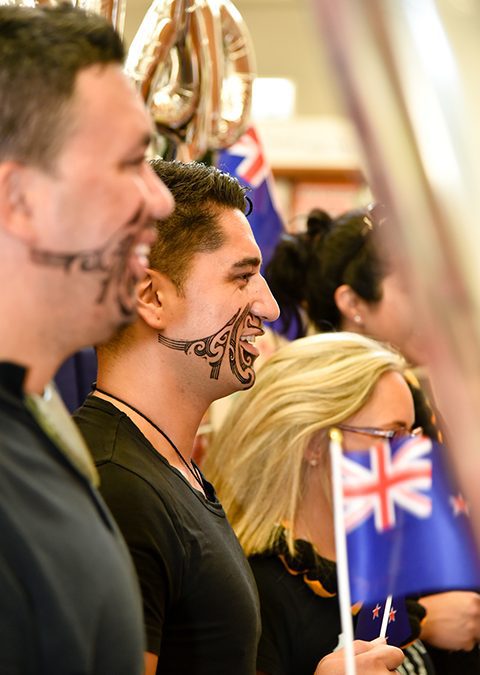
Dressed in their own traditional attire, they get to experience some of the traditions that shape people’s lives both near and far. Our generous band of parent volunteers does a fabulous job to keep the cultural experience sensorially stimulating for our young tourists with an array of delicious cuisine samplings, treasured objects, hands-on crafts, colorful flags, and costumes, and even live performances! We are incredibly proud to be able to share some of the customs ascribed to 25 nations represented at this year’s event; from Peruvian music to Swiss raclette, Japanese fans, Dutch tulips, Maori kapa haka, Korean hanboks, and Indian dancing in silk saris!
 To date, IMS’ multicultural community now stems from 46 countries. Our deepest appreciation goes out to our show-stopping volunteers from around the world! In addition, throughout the year, many of our Casa parents also present different holiday traditions that their family celebrates and share their experiences with the children; these cultural presentations help open up the 3-6 child’s awareness that even if we do not share a particular heritage, we often notice that, “We do that in our family too!” Time and again, what we find and aspire to pass on to our students, is that we are all alike. We all need and deserve a warm home. We all eat, sharing stories and laughs over food. We all love our children, hoping and dreaming for them, creating a wonderful world where they can grow into their best selves. We are special individuals; our culture and history can be shared, cherished, and celebrated. We are all humans who deserve respect, kindness, and love. About the International Montessori School (IMS)
 Since 2002, IMS has pioneered Montessori Mandarin Chinese – English Dual-Language education in Asia and is now one of the largest Montessori programmes of its kind in the world. At IMS, we recognize and respect the individuality of every child, and aim to nurture their innate curiosity, compassion, and thirst for learning. Providing an environment that celebrates the child’s independence and fosters the motivation to become a lifelong learner who is flexible, responsible, self-regulating, reflective, and persevering is our goal. By equipping them with a solid academic foundation and a strong moral compass, we guide our students to become caring and contributing global citizens of the 21st century.
IMS opened its doors in 2002 with 68 students. With the growing appreciation of the benefits of this unique way of learning, today our Montessori community has grown to almost 900 students from over 40 different countries served in four campuses on Hong Kong Island.
Tomorrow’s Child / Nov 2018 / Pg 23
Celebrating Chinese New Year
Chinese lanterns isolate on white.
Chinese New Year must be around the corner, for our school is decked in red and gold. Chinese New Year is celebrated according to the Lunar Calendar, sometime in January or February each year. It marks the coming of spring and new beginnings and is usually a two-week celebration. As in other cultures, there are many preparations leading up to the event. The week before the holiday, families clean their homes to sweep away all traces of misfortune. Shops and homes are decorated with lanterns, flowers, and bright banners. The color red and fireworks are used to frighten away monsters and evil spirits and to gain the attention of the Gods. On the night before the New Year, families celebrate with a family dinner, board games and midnight fireworks. On New Year’s Day, children are given presents of money in red envelopes and often visit neighbors and friends, with gifts of food and wishes of good fortune.
On the 15th and last day of the New Year celebration, the Chinese people celebrate what is called the Lantern Festival. Everyone goes out at night with colorful lit lanterns. Often children march in a lantern parade. The lanterns are left lit all night to thank the Gods for returning the daylight to them at this time of year. It is a time to celebrate nature, family, and friends and a time to pray for good fortune in the coming year. The day is filled with eating rice balls, family reunions, and solving puzzles often found on the outside of many of the lanterns.
Preparation in our classroom centers around a beautifully adorned display table with red and gold New Year banners, pictures of Chinese people celebrating all over the world, artifacts including the Great Wall, lanterns, dragons, and Chinese dolls. There are New Year signs on our windows and doors that welcome the children and get them excited and
curious at the same time.
In the Practical Life area, there are brightly colored Chinese bowls and spoons for transferring activities, and a variety of new ingredients for pouring including lotus nuts, rice and melon seeds. Chopsticks and a variety of culinary delights, such as star anise and peanuts, replace tongs and beads and erasers. In the flower-arranging area, fresh spring flowers are brought in and arranged for good luck with red adornments. Children learn to make a pot of tea and share it with their friends in a little ritualistic tea ceremony.
In Sensorial, the fabric box has the most gorgeous silks and other fabrics from China for the children to match. In our smelling bottles, we put a variety of spices including star anise, mixed spices, and jasmine tea. The stereognostic bags have Chinese coins, small pandas, moneybags, and little Chinese hats! Among the cultural ideas on our shelves are pairing cards of beautiful silk, weaving, and a box of objects from China, which the children can explore in conjunction with the puzzle map and flag.
The art area is a riot of activities, from appreciating Chinese artists to calligraphy and cutouts of the good-luck sign. There are fans for the children to fold and make and lanterns for them to cut, as well as firecrackers to roll and hang around the classroom.
Our talks during the week about the Chinese New Year describe the rituals performed by the Chinese people at this time of the year. We talk about the significance of the colors red and yellow, which are worn to bring good luck. We read Chinese poems and stories every day. One told about a New Year’s reunion; another of the dancing dragon; but the favorite is An Invitation to the Great Race. This tells the story of how the Chinese solar-lunar calendar came into being. We talk about the animals of the years in which they were born, and they learn more about this in literacy and have an opportunity to color and display the order of the animals in the race.
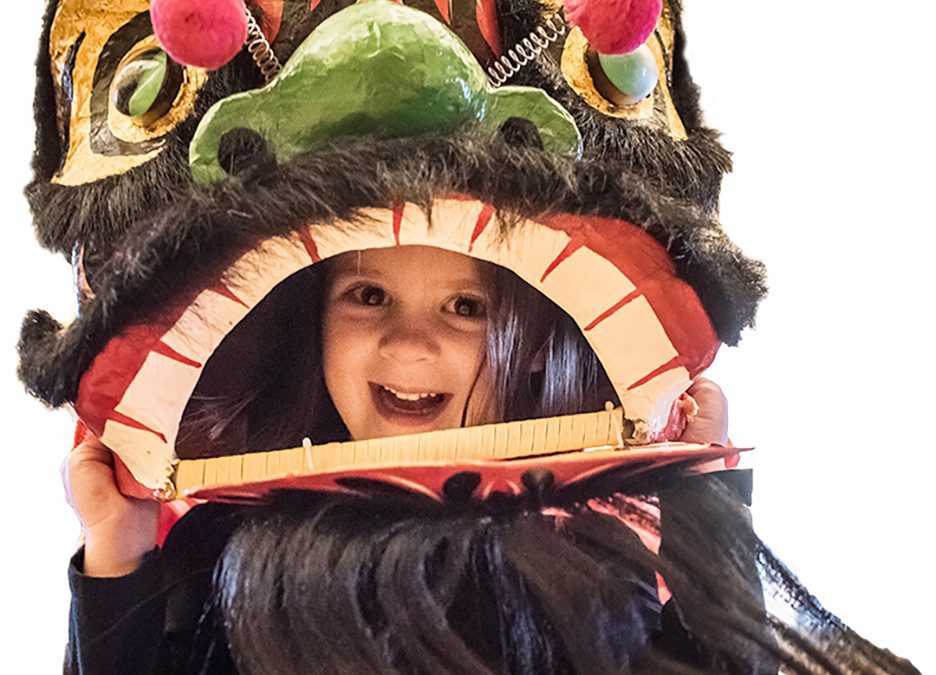
All of this leads to the very exciting event: the celebration of the festival itself. Family and friends are invited and encouraged to wear red and gold. The children carefully sweep and clean their classroom in true Chinese tradition. The performance starts with the Kindergartners introducing the audience to China and speaking not only of Chinese New Year but also of the Great Wall; the importance of the lion statues; the clothes and the money. It goes without saying that this is all done in Chinese! Chinese New Year songs follow and then, of course, the Lion Dance. It is all energy, color, and life—an experience enjoyed thoroughly by the lion dancers, themselves, and all the audience. Maria Montessori once said that, when bringing in other cultures all items, “would be received with enthusiasm,” and that “a child’s mind can acquire culture at an earlier age when involved with the movement,” as the lion dance shows.
The celebrations continue with The Great Race. The children enact the race called by the Jade Emperor with the animals gathering on the shore and crossing the river. The years of the Chinese calendar follow the order in which the animals arrived on the other side of the river. Their costumes are simple with black leotards and masks and tails. We keep their lines to one or two so they can easily memorize them and recite without stage fright! They do such a good job and hopefully, when they look back at their first acting stints, it will be a pleasant memory.
The Chinese teachers present the children with the lucky red envelope, which have some chocolate coins in them, as is the tradition in China. This is followed with a feast of all things the Chinese people consider auspicious to eat for Chinese New Year. There are dumplings, sticky Chinese New Year cake, watermelon seeds, New Year lucky candy, cookies, oranges, and jasmine tea. I overhear a parent telling a child, who insist the mother try some of the dumplings, “You are so lucky to have these opportunities I never had.”
It is true, the world is a really small place and festivals are a superb way of introducing children to different cultures and providing them with an enriching experience.
“All mankind shares a common history, a common world of cultures, and struggles toward a common future. The child should be given a sense of our heritage, our culture and our potential destiny from the earliest moments of sensitivity.
The needs of mankind are universal. Our means of meeting them create the richness and diversity of the planet. The child should come to relish the texture of that diversity.”
—Maria Montessori
Punum Bhatia, PhD has dedicated her life to Montessori education as a parent, teacher, and teacher educator for nearly thirty years. She completed her Bachelor’s degree in English Literature; earned Masters’ degrees in English Literature and Education from the University of Calcutta; and completed a certificate diploma in Montessori Pedagogy. She earned her Doctor of Philosophy from the University of Colorado Denver in 2012 for her work on the Self-Efficacy of Montessori teachers. In her efforts to understand children and the environments necessary for them to grow and flourish, Punum focuses on Maria Montessori’s original philosophy and techniques. After teaching the Montessori method to cohorts all around the world, she is now the proud owner of her very own bilingual preschool. (www.mcidenver.edu/ www.punumbhatia.com).
Tomorrow’s Child / Nov 2018 / Pg 21

Becoming A Montessori Parent

Father And Young Son Reading Book Together At Home
There are seven simple steps to becoming a Montessori parent. When we say ‘simple,’ we don’t mean that they are not challenging. It is a lot like the definition of bull riding. “The object is to keep the bull between you and the ground.” Simple—but challenging.
The first step to becoming a Montessori parent took place when you enrolled your child in a Montessori program.
That in itself is a challenge. Most of us weren’t raised in a Montessori school. The whole concept is foreign and takes a bit of courage to step out of the norm and our comfort zones. We may have chosen the program because it wasn’t like our school experience (which is why we chose it). Or we chose it because we saw something unique in a Montessori child that we knew. Or we were just plain lucky, stumbled into a Montessori school, and were fascinated by what we saw. Even then, we had to deal with the question, “If this is so great, how come the whole world isn’t lined up outside the door to enroll?” (That is the same question Montessorians wonder about, too!) But you made a complex and challenging decision to become a Montessori parent, and here you are. So how do you get the best out of your decision? You go to step two.
You begin to understand the core philosophy of Montessori. Fortunately, you don’t have to become a Montessori teacher to be a good Montessori parent. (You don’t have to know how to manipulate all of those materials, and you don’t have to keep fifteen children from climbing the walls.) The most significant Montessori concept is to respect the child. I can almost hear the wheels turning: “Of course I respect my children; I love them very much; that’s why I have them in Montessori; I want the best for them.” Of course, you love them, but respect is different.
Respecting the child is, first, to respect the nature of children. Children are not mini adults waiting to be molded. They are like tadpoles and caterpillars that have their own form and function of life, waiting to become what they are intended to be. We are often impatient for them to ‘become,’ because we don’t realize that childhood (with its curiosity, playfulness, messiness, and all) is part of the process of them transforming themselves into the adults they will become. We have to respect that process, which doesn’t mean they always get to do what they want.
One of the operative words in Dr. Montessori’s writing is the word ‘train.’ We do need to train our children, but we need to train ourselves not to destroy that which is good in the nature of our children. The second part of respect is to respect the personality of your child. Your child is not a blank slate. They are already imbued with the unique characteristics of who they are. The artistic bent is already there. The math bent is already formed. The leader, the follower, the giver, the taker, the extrovert, the introvert are already present in your children’s DNA. Right or left-handed; right or left brained are already formed.
So how do you cooperate with nature? You become an observer. That is the next step in becoming a Montessori parent; you train yourself to observe. To what interest does your child gravitate? What gives them great joy? What occupies them endlessly? These are all clues to who your child is becoming. You are fortunate that you have a trained helper in your child’s Montessori teacher. At your next parent conference, you should ask more than “what has she done?” but who do you see her becoming. It is hard to cooperate with nature if you are not aware of the nature of your child.
Our third step is to become their champion. I know. I hear you say, “Of course, I’m their champion. I love them.” And you do. But are their goals your goals? Translation: Do you have goals for them that do not take into account who they are? (There are many ‘jock’ fathers who do not have ‘jock’ sons.) Yes, you have many wonderful goals for them to be caring and loving, honest and faithful, upright, truthful, etc. These are worthy, significant, and meaningful goals; however, the expression of their lives (career, vocation, work) is best met and fulfilled according to their gifts.
When your five-year-old says, “I want to be a fireman.” He may be reflecting the latest book or television program he’s seen. However, if you continue to ask the why questions: “Why do you think that would be a good job? Why do you think that you would enjoy that?” you may discover that your child is not drawn just to the excitement but to the fact of wanting to help people or, perhaps, he likes the aspect of being part of a team. All are important clues to his personality. Your child needs you to champion and encourage his personality (especially, if it is different than yours.)
The fourth step is to practice what they learn at school: grace and courtesy. Please and thank you, May I, Excuse me, Please forgive me, and a host of other considerations practiced (and modeled) at home will go a long way to giving your child every advantage in life. People respond favorably to a child with great manners.
Fifth, practice independence. Independence is the ability to be self-governing, and that comes from making choices, living with the consequences, and having responsibilities. As often as possible, give your children choices. “What do you want for breakfast, cereal or eggs?” (Don’t offer choices where there are no choices. “Do you want carrots? They say no and you serve them anyway.) Give your children chores they can accomplish: making their beds, putting dirty clothes in the laundry, dishes in the dishwasher, etc. Chores build responsibility; responsibility builds independence; independence builds confidence.
Sixth, give them the gift of time. Give them time to accomplish their chores. Give them time to be children. Give them time to breathe. Give them your time.
Seventh, practice humility. They have a lot to learn from you. What is easy for you as an adult is mystifying and beyond challenging for them. Let your words be seasoned with grace. Look for the good in what they do. Their motives are often pure; their actions imperfect. Yet, we have a lot to learn from them. And when you are wrong (when not if) practice the humility of saying, “Please forgive me.” It will not destroy your authority or their respect for you. It will teach them one of the great lessons of life: when you fail, whether it’s in a relationship, school, career, or life, own the failure and start over again to succeed another day.
Becoming a Montessori parent is to become the best parent you can be.
Reprinted with permission by the author.
Tomorrow’s Child / Nov 2018 / Pg 13
Worried about Your Teens When They’re Out and About?
When my kids were teenagers, I could make it through the day. But at night, when my head hit the pillow, in the dark is when it would begin. I would toss and turn, worried about my kid…. Who was she with? What was she doing? Would she finish school? Would she be able to get into college? Am I doing the right thing? What was I thinking when I let her…. This litany of fears would spin out of control and take me to some very dark places. Why is it important to stop worrying and what can we do instead? Join us to find out.
Featured
-
 Montessori Family Alliance School Group Membership (Print & Digital 2026 1/2 year pricing)
Original price was: $30.00.$15.00Current price is: $15.00.
Montessori Family Alliance School Group Membership (Print & Digital 2026 1/2 year pricing)
Original price was: $30.00.$15.00Current price is: $15.00.
-
The Montessori Way, Revised and Expanded: An Education for Life; A Comprehensive Guide for Parents and Teachers
$25.00
-
The Montessori Child: A Parent's Guide to Raising Capable Children with Creative Minds and Compassionate Hearts (The Parents' Guide to Montessori)
$20.00
-
The Montessori Toddler: A Parent's Guide to Raising a Curious and Responsible Human Being (The Parents' Guide to Montessori)
$20.00
-
Montessori in Action: Building Resilient Montessori Schools 1st Edition
$29.95