by Geoffrey Bishop | Empowerment, MFA, Mindfulness, Outdoor Education / Resources, Reading, The International Montessori Council, Tomorrow's Child

Looking over Lake Pokegama in Northern Minnesota, I was watching the beautiful white sails of the X boats gliding back and forth, propelled forward by their wind-taut sails. Sitting upon a bench above the water, I spent hour after hour tracking the wind and the boats. More than likely I was accompanied by a curmudgeon of a man, known fondly as Uncle Charlie by the campers. Uncle Charlie’s stories never ended, much like the wind and the sailors’ laughter. Sitting on that bluff, I knew that teaching sailing could open a window into a child’s desire to learn—a vessel to connect them to their world.
Oddly enough, I had never felt the joys of sailing, not on a sailing boat that is. My closest experience to boating came atop the crude rafts we would build as children to float on the small creek at the front of my childhood home “Moona,” a sheep station in the bush of Australia. These rafts were constructed of anything my brothers could get their hands on old sheep dip drums, wood, rope. Each construction resulted in an uncomfortable, unstable platform that we used to ride the crude rapids that intermittently scattered along our creek. The goal was never comfort—we weren’t trying to laze our bodies on; it was all about floating on our homemade contraption. Most of the time, these crafts slowly fell apart as the lashing (used to secure the drums to the deck) came loose…but these were the best of times.
Listening to Charlie and watching the kids, I realized: This is how children understand their surroundings; this is how they become aware of where they stand in nature. For a child to really understand their place within humanity, they must first connect to the place in which they live. This connection fosters the relationship of that place to the space they occupy. Once a child grasps this connection, the child’s mind opens to the potential of peace, freedom, and learning.
What I mean by the term place is where you live, where you spend your day, the physical location of your life. Space has a very different meaning; it is the air, the soil, the environment, to the people. It is like the description of good wine: the essence of everything that goes into making a wonderful wine, from the soil, the mist off of the hills, the sunshine to the vintner, and the barrel it is aged in. The totality of everything is reflected in the flavor of the wine. This is what is space.
As a child, our farm was my playground, filled with danger (not simple dangers, but life-threatening and catastrophic dangers). So much so that a reality TV show could be made of it, entitled “Child Survivor” or “Child vs. Wild.” But for me, this was paradise. There were snakes, spiders, scorpions, creeks, not to mention the miles and miles of bush where, as a three-year-old, I wandered uncompromised. That was my world: my teacher.
Many may wonder, how does one survive in an environment with deadly snakes and spiders that could paralyze you with a single bite? Where does a child safely play with scorpions hiding under every rock, in gullies and mountains that could swallow a child and never release him?
Growing up in Australia, I developed an acute sense of my environment out of necessity. Unawareness left me vulnerable to the ever-present dangers. I sensed the presence of a snake. With no visual cues, my body would react to the danger with heightened senses. These heightened senses governed my movement by bringing me to an immediate halt before my cognizance arrived. Slowly, my body would begin to back away, allowing my mind and consciousness to take in the surroundings. This sixth sense protected me from my childhood world.
Like the child playing in the bush of Australia, the children sailing across Lake Pokegama need to develop a keen understanding and awareness of their surroundings. The sailor must feel the wind. To glide effortlessly across any body of water, regardless of conditions, the sailor studies the movement, speed, and directional changes of the wind. After much practice, the connection to the wind becomes a part of the sailor’s environment; it becomes second nature. You know it’s there, and instinctively you detect its moods and changes. To sail well is to optimize the wind’s gifts.
E.O. Wilson, an American biologist, and researcher describes this idea as ‘biophilia’ — an innate sense that connects you biologically to your surroundings. This sense can guide you through life, protecting and helping you navigate your surroundings. It’s the feeling of calm you experience when lying under a great oak tree in soft grass or the fright that squeezes the breath from your lungs when dangling next to a cliff’s edge. All these feelings have no basis in logic. We are not told as children to be afraid of falling off a cliff, and yet we all know it. We are not told to feel calm when connected with a large oak or a sunset. We just know it.
What is the origin of this feeling? How does it develop in our minds? I call it the caution meter—that little voice that says: “Stop! Not a good idea!” The caution meter develops by experiencing as much life as we can: learning our own limitations and pushing those boundaries. The only effective caution meters are established internally, individually—not through limits and boundaries set by parents or adults.
This may fly in the face of intuition, especially for young parents who want to protect their children. They don’t want their child to get hurt. “Save the skinned knees for stories out of a book!” But the skinned knees, bruised elbows, and bumps or knocks teach us our limits. Paradoxically, they also push us to seek new heights, to test our capabilities. Without this gift of experience, we will never know what we are truly capable of. Wrapping our children in cotton wool, over-protecting them, only serves to teach children that they are not capable, they are vulnerable, and that we do not believe in them. In effect, we prevent children from developing their own caution meters.
There are secrets of the world to be discovered by each child—secrets that an adult can never reveal. Perhaps these secrets may help to understand human potential. Maybe they unlock an understanding of one’s place in the world. If children are to discover these secrets, their minds and bodies must be free. To be free is to be vulnerable or at risk. With risk comes failure. However, it is only through failure that true greatness occurs.
As a child, my mother would read to me each night before bed. I remember those evenings, vividly. My mother’s focus, free from the daily demands of running a farm and home in a harsh environment, finally turned to me. I would lie, tucked under the blankets, while she read the same book, night after night. Children love to hear the same stories repeatedly so that every detail, each nuance can be remembered. My story was Pookie the Rabbit with Wings by Ivy Wallace. Written in the early 1940s, the beautiful watercolor drawings and the magical story mesmerized me. It drew me into a world that would profoundly affect my life.
The story is told through the eyes of Pookie, a small rabbit born under a great fir tree with twelve brothers and sisters. Unlike his brothers and sisters, Pookie had two stub wings protruding out of his back. He does not fit in and is picked on at school, even made to wear the dunce cap by the teacher. Unhappy, Pookie packs a small bag and ventures to find his fortune—to find where he fits in.
The story of Pookie, his adventure and life, became the mantra of my life. From early childhood to not fitting in at school, the great wide world was a dream. Like Pookie, I also went forth into the world to seek my fortune. I sought to discover my true self, my strengths, weakness, dreams, and aspirations, to fit in. On this odyssey, I discovered many secrets, each of which has guided my life.
One secret that led me to teach is that buried deep inside each of us is a true gift. This gift distinguishes us in the world. However, few of us allow ourselves to experience enough in life to discover that true gift. As we age, we narrow our field of vision, narrow our acceptance of new ideals. Essentially, we become set in our ways; thus, blocking our true potential. Those who have found their passion bask in the light of true happiness. Their shine is contagious and undeniable.
In my travels I witnessed happiness in simple and complicated ways, through my observations and interactions with others. One interaction remains particularly vivid…
I am traveling in Morocco with a friend. Paul and I have been on the road for two weeks now, traveling south from Madrid through Granada. We have witnessed the different influences along the way: the Moorish influences of the Alhambra and the gardens of the Generalife to the dynamic British influences seen in Gibraltar. Then we crossed the Mediterranean to Tangier in Morocco. What a magical country. From Tangiers, we made our way south through Fez and the markets of Marrakesh and, finally, into the Atlas Mountains. It was here, near the small town of Asni in the mountains, that I witnessed true happiness in simple lives.
Wandering into a valley, Paul and I encountered a group of boys minding goats in the lower meadow. We wished to communicate with the boys, but we shared no common language. Soccer became our language. After playing for a while, the boys needed to return the goats to the village for the evening. Using only their hands and smiles, they invited us to the village. We worried that accepting would be impolite because the invitation hadn’t come from an adult. When we inquired about a hotel, they insisted we accompany them to their home. So we followed.
We spent every minute with that family for two days. The family of three young boys, two older sisters, and the parents shared a two-room house above the animal stores, where about 100 goats lived at night. The entire family, including Paul and I, shared everything: a large rug laid for a bed, eating together out of a tagine for meals, and the daily tasks of tending mountain goats. Living in the mountains meant the family relied upon the natural world to meet all of their needs. Despite this apparent hardship, the family bestowed hospitality, while expecting nothing in return.
The life of this family was truly hard. However, their happiness clashed starkly with the path of young people in our society today. Pressured to achieve in school, to earn admittance to a top-tier university so they may obtain a secure job, it is no surprise our young adults are so dissatisfied. This predetermined path does not necessarily incorporate the dreams and passions of each individual. Unlike the sailor connected to the wind on the water, many of us are not connected to our own place or space. We live a life hovering just outside, with a yearning to enter but unaware of how to do so. With modern world demands of adulthood, life does not allow us to “take the road less traveled” that is the mission of childhood through adolescence.
As teachers and mentors, it is our job to prepare the environment so that children can learn through multiple experiences, failures as well as successes. Laying open this path to self- discovery, we allow children to develop a true and natural understanding of themselves and their unique place within the world. We must provide the freedom to fail, so that they may succeed. ′
REFERENCES
I.V Wallace. Pookie the Rabbit with Wings, 1945.
E.O. Wilson. Biophilia,Cambridge:
Harvard University Press, 1984.
Robert Frost. The Road Not Taken, August 1915.
Reprinted and reformatted with
the permission of the author.
This article first appeared
Montessori Life magazine.
Tomorrow’s Child / April 2019 / Pg 4
by Jonathan Wolff | Adolescence, Child's Work, Early Adolescence (12-15), Emotional Intelligence (EQ), Empowerment, Imagination, Later Adolescence (15-18), Lower Elementary (6-9), MFA, Mindfulness, Mixed Ages, Montessori Middle School, Montessori Secondary / High School, Prepared Environment, Upper Elementary (9-12), Webinars / MFA, Young Adolescent
What kinds of life skills will your child need to be successful – happy, healthy, and productive – in the 21st century? Beyond facts, figures, and formulas, what will young people need to know to find their way and make their mark in a world which increasingly demands higher order thinking, social intelligence, and self-organizing abilities? In this workshop for parents Jonathan Wolff, international Montessori consultant, teacher and school leadership educator, will illustrate how the Montessori Method not only produces capable scholars, but more importantly, empowers young people to think for themselves, think of others, and think out-of-the box.
by Punum Bhatia Ph.D | Empowerment, Maria Montessori, MFA, Mindfulness, Montessori Charter Schools, Montessori Education, Peace Education, Practical Life, Prepared Environment, Research
“The first essential for the child’s development is concentration. It lays the whole basis for his character and social behavior.” (Montessori, 1988, p.202)
Dr. Maria Montessori (1870-1952) believed that children have an inner directive for their optimum self-construction and that concentration is the key to their natural development. This was perhaps one of her major contributions to the world: that if protected and nurtured, the child’s inner guide will lead to the development of the child’s full potential. She asked those working in her schools for close observations of the children’s behavior, and it was Signorina Maccheroni in Rome who first provided specific information concerning the way in which the children were working:
“The child keeps still for a while, and then chooses some task he finds easy, such as arranging the colors in gradation; he continues working at this for a time, but not for very long; he passes on to some more complicated task, such as that of composing words with the Moveable Letters and perseveres with this for a long time (about half an hour). At this stage, he ceases working, walks about the room, and appears calm; to a superficial observer, he would seem to show signs of fatigue. But after a few minutes, he undertakes some much more difficult work and becomes so deeply absorbed in this that he shows us that he has reached the acme of his activity…When this work is finished, his activity comes to an end. In all serenity; he contemplates his handiwork for a long time, then approaches the teacher, and begins to confide in her…The appearance of the child is that of a person who is rested, satisfied, and uplifted.”
(Montessori, 1917/1965, p. 97).
Many years of observation convinced Montessori that the work of the child and the formation of the personality occur during periods of intense concentration, which she called “polarization of attention” (Montessori, 1917/1965, p. 68). She observed that children deeply engaged and fully concentrating on a task at hand were transformed and “showed extraordinary spiritual qualities, recalling the phenomena of higher consciousness” (Montessori, 1917/1965,p. 68). After completing a cycle of activity, children seemed refreshed, calm, and satisfied. This is similar to what Csikszentmihalyi (1997) termed “flow” and can be understood as an ability to focus on an interesting activity, which leads not only to quality performance but, most of all, to maximum effort and intensity of concentration.
For all of this to happen, there are certain key elements that need to be in place and, because this is not always the case, there are many differences in Montessori schools. The adults in Montessori settings facilitate children’s learning by preparing a favorable environment that meets the needs of the children and challenges them as well. They use observation as a vital tool for understanding and nurturing the individual potential within each child, offering plenty of opportunities for spontaneous engagement in activities. This requires the adult (or guide) to be well trained. Montessori placed the preparation of the teacher and the cultivation of her attitudes and values at the center of the process of becoming a teacher. In Montessori teacher training, preparing the adult emotionally and spiritually is fundamental to the education of future teachers. According to Montessori,
“The first essential is that the teacher should go through an inner, spiritual preparation; cultivate certain aptitudes in the moral order. This is the most difficult part of her training, without which all the rest is of no avail…She must study how to purify her heart and render it burning with charity towards the child. She must “put on humility,” and above all, learn how to serve. She must learn how to appreciate and gather in all those tiny and delicate manifestations of the opening life in the child’s soul. Ability to do this can only be attained through a genuine effort towards self-perfection. (Standing, 1957, p. 298).
Montessori teacher education is unique to others in placing more emphasis on developing self-awareness than on building theoretical knowledge. Inner preparation cannot be seen as effortless or resulting in an immediate transformation; it requires a lifetime of both deep reflection and passionate commitment. Given the inherent difficulty in changing existing beliefs, coupled with the relatively short duration of some Montessori teacher training programs, developing a valid lens through which a candidate can become a self-aware adult is not a simple undertaking. There are so many schools that I visit where the adult is not Montessori trained or may have had the bare minimum of training. It always surprises me how anyone can take on a classroom with only six months of online training!
Montessori teacher trainings can vary greatly from one to another, and this can get confusing for someone who is new to it all. A good benchmark to follow is to determine if the training center is a MACTE (Montessori Accreditation Council of Teacher Education) accredited institution. This way certain standards have been met, but there will always be some training centers that emphasize more on the methodology and others on the philosophy. The schools also have a role to play in whether they support the teacher’s observing daily and using their findings as a foundational tool to guide each child’s learning. Montessori was very firm on this aspect of “following the child.” At Montessori Casa International, the teachers have an hour every day of the morning work cycle to observe the classroom, a particular child, or themselves. Later, they get together as a team and discuss their findings with the intent of improving their practice. They also undertake regular professional development to enable them to be reflective practitioners and lifelong learners. Learning does not stop once the training and the albums are done! It is an ongoing process, as the child makes abundantly and repeatedly clear. In order to serve as the best facilitators for the child’s natural development, learning, and discovery, it is crucial that they be well trained.
Another element that makes a difference in Montessori schools is the prepared environment. Montessori classrooms are “usually a large, open-feeling space, with low shelves, different sizes of tables that comfortably seat one to four children, and chairs that are appropriately sized for the children in the classroom” (Lillard, 2005, p. 18). Montessori describes this environment as a place where the child is nurtured, for its design meets his needs for self-construction and helps him reveal his personality and growth patterns to us. In the calm, ordered space of the Montessori ‘prepared environment,’ children work on activities of their own choosing and at their own pace. They experience a blend of freedom and self-discipline in a place specially designed to meet their
developmental needs.
A collection of materials (apparatus) is displayed on the shelves, with everything carefully ordered and in its place. The materials entice the child because they are: placed in the center of his vision; are within easy reach; and have a sensory appeal, varying in color, shape, size, texture, and possibilities of manipulation. The array of sensory contrasts, however, suggests purposeful variation rather than a random placement of brightly colored objects. A well-trained teacher will be able to organize the classroom according to the Montessori principles and, with some years of experience, will be able to make it aesthetically pleasing, ordered, and well maintained. Again, it baffles me how some are able to take on this job with little or no training. Surely it has to be daunting; the didactic apparatus/materials have a language and history all their own, and it takes years and years of practice to understand it.
Some schools choose to go with materials that are not the highest quality, without understanding the impact this makes on the lessons. For example, the experience of the biggest cube compared to the smallest one is not only in size but also in weight. I have seen some Pink Towers that are as light as can be! Budgets can be constraining, but isn’t it better to go with less but of the highest quality than more that one has to replace constantly? The licensing supervisor who came to our school was very confused about the range of materials she had seen in the various Montessori schools she visited and said she could not approve of some. When I expressed surprise, she walked to the shelf with me and pointed to the Constructive Triangles, which she said had dangerous points to them.
This is worth exploring further—why is it that there is such a range of Montessori schools? We know that the Method was never copyrighted; anyone can open a school and call it Montessori. There is no governing body that holds the schools accountable. Some are a little more honest and declare their school as “Montessori inspired” or “Montessori Lite.” Others don’t even do this! I caution the families that tour my school that what they see here can be totally different from the next Montessori school they visit. Admittedly, this can be very confusing for families that are seeking only the best for their children. A grandparent who visited our school recently and is an educator complimented me on not “warehousing” our children. She said she had never seen anything quite like this school and the way we develop the child’s individuality. I really am not sure why other schools cannot do the same. Is it a lack of understanding the Montessori philosophy, a scarcity of overall education, or is it a pursuit of profit that makes for compromises?
Another element that makes for an authentic Montessori school is multi-age groupings aligned with the planes of development. There was a reason why Montessori divided the classrooms the way she did and, yet, we often see two-year-olds in the primary classroom and sometimes a classroom only for the three-year-olds! Many a time, you don’t even have to visit the school to see this happen: it is on their website! So also is the lack of the three-hour uninterrupted work period for the 3-6 age group and a two-hour work period for the 1-3 age group. A work cycle of three hours allows the child adequate time to become involved in his/her work, to observe, and then become significantly engaged in an activity. “There is a vital urge to the completeness of action, and if the cycle of this urge is broken, it shows in deviations from normality and lack of purpose” (Montessori, 1948/1967, p. 57). This is part of what makes Montessori unique and, as much as possible, this work cycle should be respected. An interruption, no matter how beneficial an adult may consider it to be, disturbs the growing development of the child’s concentration and focus. In fact, if children are aware that they may be interrupted during the course of the morning, they may choose not to work at all. Hence, it is crucial that all Montessori schools respect the three-hour uninterrupted work cycle, knowing that it is the foundation for the child to achieve lengthened periods of concentration, discipline, and normalization.
Montessori writes:
“Only normalized children, aided by their environment, show in their subsequent development those wonderful powers that we describe: spontaneous discipline, continuous and happy work, social sentiments of help and sympathy for others”
(Montessori, 1988, p.188).
Another element that makes the difference between the quality and authenticity of a Montessori school is the school’s vision, commitment to improvement, and leadership. Is the educational leader/director knowledgeable about Montessori? I always joke that I would never accept a job as a Supervisor/Manager at Home DepotTM because my knowledge of tools and building supplies is nil. How then does a person who does not know what Montessori is accepting a job as the leader of a Montessori school? How can s/he ensure that all aspects of the school are guided by Montessori principles? Doesn’t the difference start there?
In order to provide the highest level of Montessori experiences for children, we should be determined to provide them with the best start in life, not finding short cuts but staying true to the philosophy and methodology. The Montessori light should guide us, and we must not forget our teacher who allowed no obstacle to steer her away from her path of service to the child. In the words of Signorina Maccheroni:
“In the strange and wonderful life that has been hers, destiny has led her from country to country, from enterprise to enterprise, destroying, again and again, all she has created. But her courage and faith have continued unabashed wherever she was. No matter what her circumstances of life, she has continued her work for a better humanity, for peace, and for an understanding of the mission and nature of childhood” (1947, p. 108-109).′
References
Lillard, A. S. (2005). Montessori: The science behind the genius. New York: Oxford University Press.
Maccheroni, A.M. (1947). A true romance: Maria Montessori as I knew her. The Darien Press, Edinburgh
Montessori, M. (1917/1965). Spontaneous activity in education: The advanced Montessori method. Oxford: Clio
Montessori, M. (1988). The absorbent mind. Oxford: Clio
Standing, E.M. (1957). Maria Montessori: Her life and work. New York: Penguin.
ML/ Feb 2019 / Pg 11
by Michael Dorer, EdD | Mindfulness, The International Montessori Council, Webcasts / IMC
Be Our Guest The Art Of Hospitality In A Montessori School 1
by Kathy Leitch | Communication, Empowerment, Mindfulness, Montessori Education, Montessori Teachers, Parent Education, Planes of Development, School Leadership, The International Montessori Council, Webcasts / IMC
The Life Cycle of a School Year how to get ahead of the curve!
by Tesha Miller | Communication, Emotionally Healthy Children, MFA, Mindfulness, Mixed Ages, Peace Education, Tomorrow's Child
Portrait Of Pupils At Montessori School During Outdoor Break
If we are to teach real peace in this world…we shall have to begin with the children.
—Mahatma Gandhi
Montessori education has been referred to as “peace education”; Montessorian Sonnie McFarland calls peace education a “Montessori best practice” (Montessori Life, January 2005); and even Gandhi praised Montessori’s approach to world peace. So, how is peace cultivated in a Montessori classroom?
The Quiet Hum of Peaceful Activity
Visitors often marvel at how Montessori classrooms seem to have a “hum” to them. It is no wonder that children in a Montessori classroom seem joyful, relaxed, and happy. They are able to choose an activity and work at it as long as they like. The children interact with their peers and move about the room freely. The teacher’s main goals are to make sure children are engaged, to connect children with the prepared environment, and to protect their work once they are immersed in concentration. One can sense a spirit of purpose, satisfaction, and joy permeating the room.
But this does not happen magically! It is the teacher who helps to protect children’s work by showing other children in the classroom how to watch, how to walk around a work rug, or how to interrupt politely. With ongoing Grace and Courtesy lessons, we are able to give children tools for resolving conflicts peacefully and ways to cultivate a peaceful and productive environment for learning.
Although the process of engaging in purposeful work, itself, evokes a sense of calm, it is also due, in large part, to our Grace and Courtesy presentations. Based on observed behavior, these related presentations contribute to what can become a harmonious state. It is also through the Grace and Courtesy framework that we are able to teach in a proactive, rather than reactive, way.
Constructing Grace & Courtesy Lessons
Grace and Courtesy lessons can be carefully planned or done in an impromptu fashion. By keeping a few of these lessons in the back of one’s mind, they can be a great way to fill in the gaps during transition times. These lessons can be modeled by the teacher and/or rehearsed and modeled by the children themselves.
At the beginning of the year, it may be necessary to introduce and practice up to seven or eight Grace and Courtesy ‘skits’ per day. From modeling “how to walk around a work rug” to “how to ask for help,” these quick lessons (sometimes with words and sometimes without) give children tools to navigate their environment and social landscape. Other lessons are more social and provide a way to establish a classroom management technique that is child-driven rather than teacher-driven.
Always relevant to the classroom community, Grace and Courtesy lessons empower children to be responsible, self-aware, and independent. These activities are about respecting children’s needs and considering the whole classroom community as a collective unit. Practicing modeled behaviors at neutral moments allows children to discover much-needed tools, and they are grateful to know what to do and say in frustrating or difficult circumstances.
Through the structure of Grace and Courtesy, children are able to practice respectful communication, and they are given tools to respond to others. Grace and Courtesy lessons are an invaluable tool for the teacher in the way that they allow us to put special energy on behavior we want to support. The lessons serve our classrooms well because we can revise what lessons are given, as needed, in response to observing how the children interact with certain objects and/or others.
The Value of the “Invisible Curriculum”
Angeline Lillard, in her book Montessori: The Science Behind the Genius, wrote that the lessons of Grace and Courtesy “are on par with lessons in math, music, and language.” (2007, 198-99) There are no physical materials on the shelf to remind us of the importance of Grace and Courtesy; these activities cannot be seen, but they mustn’t be forgotten. Ginni Sackett (AMI trainer, Montessori Institute Northwest) has said that Grace and Courtesy is a part of Montessori’s “ invisible curriculum.” Other “invisible” activities that can be considered a part of this curriculum are Spoken Language, Silence, and Walking on the Line. This “invisible curriculum” is one of the most significant components of the Montessori environment. In fact, because of the invisible aspect of these activities, it is all the more critical that the Montessori teacher is conscientious about implementing them.
Grace and Courtesy presentations are an ongoing, collaborative aspect of our curriculum that invites the children and teachers to work together to forge a culture of responsibility, tolerance, and harmony. Every classroom is unique, and the great beauty of a Montessori classroom is that its educational construct and style allows each classroom’s own definition of peace to develop and flourish. We are not teaching to a test or moving children along, and we are able to pause to explore the dynamics of an issue or problem.
How to Make Lessons Most Effective
When presented, Grace and Courtesy lessons should have the same points of interest and analysis of movement that a Practical Life or Sensorial lesson would contain. Emphasis on body mechanics, body language, and enunciating words clearly (if the skit includes words) are all critical, as children may absorb every aspect of the modeled behavior. Often, we take for granted the behavior we have mastered as adults; whereas, children might see our actions as a flurry of movement that they couldn’t possibly master themselves. So backing up, and even reviewing what you might do to execute a specific series of motions that make up a complete action, can be helpful when emphasizing certain aspects of a Grace and Courtesy lesson to children.
Just as a scientist evaluates his data, the Montessori teacher is advised to watch and discern what is and is not working as a result of a Grace and Courtesy lesson and to revise the variables accordingly. For example, if a Grace and Courtesy lesson on “what to do when you say excuse me” isn’t working (i.e., the children are still bumping into each other), you could follow up by isolating the words and then the movements. Re-present the lesson with not just the words, “excuse me,” but 1) by first verbalizing “excuse me,” and 2) by then making a very clear demonstration of how you would move your body by stepping to the side.
A Framework for Peace
Grace and Courtesy lessons are our framework for modeling peace. Participating in Grace and Courtesy skits gives children the confidence they need to function independently in the classroom, and since the classroom is a microcosm of the larger world, these rehearsed social scenarios are great tools for life. As Montessori teachers, we have a built-in foundation for peace education; all we have to do is come up with the appropriate Grace and Courtesy lessons to model.
A Sampling of Grace
& Courtesy Lessons
How to walk around a rug
How to ask for a hug
How to blow your nose
How to greet a visitor
How/when to say “excuse me”
How to ask for help from a teacher/friend
What to say if someone says “you’re not my friend”
How to walk with scarcely making a sound
How to tell someone you want to be alone
How to watch someone do work
How to clean up your snack
What to do if you’re really angry
How to agree to disagree
Tomorrow’s Child / Jan 2019 / Pg 23
by Cassi Mackey | Communication, Empowerment, Kindergarten, Lower Elementary (6-9), Mindfulness, Mixed Ages, Montessori Middle School, Montessori Secondary / High School, Parent-Teacher Communication, Primary (3-6), Tomorrow's Child, Tomorrow's Child Online Issue, Upper Elementary (9-12)
Lively conversation in a queue. Two unemployed attractive young women in strict clothing talking to each other at the HR department and discussing their resumes while waiting their turn for a job interview
Education requires parents, teacher, and child to work together in cooperation. A weakness in any of these decreases the efficiency of others while inhibiting the development of the child.” —Maria Montessori
Courageous Conversation occurs when people come to a conversation with a deep concern for human welfare, values, and dignity. It exists as people say what they honestly think and feel, so others can hear their message without feeling judged and can respond to it in like manner without feeling afraid of retribution. The purpose of Courageous Conversation between parents and teachers is to create a safe space for meaningful dialogue and discussions about issues regarding the child. The desired end is to understand each other’s perspective and work together to best serve the child. This process requires vulnerability, humility, open-mindedness, compassion, kindness, and respect.
It is important that Montessori teachers understand they serve the whole family when they have a child in their care. The parent-child relationship is sacred, and the love they share is enough of an impetus for teachers to seek understanding. Because of this factor, teachers’ interactions with parents must come from a place of love, compassion, and support. It is also important for parents to come to the conversation with the same awareness, and intentions; it is important for parents to see the teacher-child as a revered relationship.
When both parties show up with these intentions, it creates a space for a true and honest dialogue to take place. These conversations are not always a means to an end. They are designed to be a reflective learning process. They are an opportunity to seek understanding regarding others’ viewpoints and assumptions. If done with an open heart, these conversations can create a flow of meaning and a new and shared understanding of the child’s learning can emerge. Dialogue is a medium for the collective exploration of meaning; it is not a search for who is right. If we value the process of exploring the thoughts and feelings of others as much as we value our own, it leaves us open to being truly changed by the conversation.
This change creates an opportunity for parent and teacher to work in concert for the good of the child. Only then can real productive and effective discussion begin, discussion being a conversation where decisions are made, agreements are reached, priorities are identified, and action steps are set. It is through Courageous Conversation that teachers and parents can build, nurture, and maintain a healthy relationship.
Courageous Conversation can be difficult for parents because of the fear that surrounds it. Parents are sometimes hesitant to disclose family issues or may be reluctant to admit hard things about their child. One of Montessori philosophy’s main emphases is the development of the whole child, yet teachers don’t get to experience the child fully. They rely on parents to help complete the child’s story, even if the story is painful at times. These contributions work both ways. As a parent, keep in mind that teachers are your teammates and not your adversaries. Parents are sometimes concerned that they will receive a negative reaction from the teacher for things said during a conversation or there will be repercussions for the child. The benefits of Courageous Conversation far outweigh this perceived fear
and trust must be granted in both directions.
One of the most powerful ways to overcome resistance to Courageous Conversation is to deepen your understanding of what it looks like in practice and how it can lead to a better partnership with your child’s teacher, which will enhance your child’s experience and ultimate growth. Start by believing the teacher loves your child and that the teacher’s greatest desire is to build a strong collaborative
relationship with those who love the child most.
Preparation by Parents for a Courageous Conversation
Remember, you are on the same team with your child’s teacher, working together in partnership for the good of your child. Be prepared to collaborate. You should expect your child’s teacher to keep your matter private, to address it promptly, and to be professional.
Raise your concern as early as possible; don’t delay. However, if you are feeling emotional, you might wait until you feel calm enough to talk.
Raise your concern directly and privately with the teacher. If needed, the administration will get involved, but speaking with the teacher first always builds trust and respect.
Decide if it’s best to have a phone conversation or to set a formal meeting time. E-mails or texts can be misinterpreted in so many ways. A phone call or meeting is easier to navigate and will be more productive.
Refrain from having the conversation on the fly (carline, before school, school event, etc.) or in front of other staff, parents, or children.
Refrain from getting other parents involved in your concerns. This tactic is not beneficial to a collaborative, trusting partnership.
Go into the conversation expecting the best intentions from the teacher.
Go into the conversation expecting to find common ground.
Be prepared to hear “the good, the bad, and the beautiful” about your child.
Go in understanding that you may not have the whole story.
Be clear about what you want to discuss. Focus on the things that genuinely affect your child. Be specific; give examples and details. Bring ideas and notes to the conversation. Be prepared to ask questions and to listen.
Guidelines for a Successful Courageous Conversation
Verbally acknowledge that these conversations can be difficult, and neither one of you is an expert on communication, so the goal is to navigate the conversation together with understanding and compassion.
Be respectful, kind, and open to new perspectives.
Show grace and courtesy.
Act as if a child was observing the conversation. Model how you would want your child to conduct a difficult conversation.
Keep conversation solution-oriented and not blame-oriented.
Be impeccable with your words; don’t assume and don’t take things personally, trying not to get defensive.
Keep the conversation about your child. Do not generalize or ask questions about other children. Teachers have to adhere to strict privacy laws and should not answer questions regarding other children. Trust that teachers will address concerns with the students involved, and with their parents, directly.
Be open to hearing your child’s part in a situation, better yet, ask, “What part did my child play?”
Choose words that promote partnership: “Can we talk about how Sue can build some friendships?” shows you are working in partnership, as opposed to, “Why isn’t Sue making any friends, the kids are all mean to her.” This comes across as an accusation.
Once you have all the information, you can assess the situation in a more thorough manner and ask follow-up questions for clarification
and understanding.
Think about what you want for your child. What would be an acceptable outcome? Is it in alignment with the Montessori philosophy?
Finish the conversation with an action plan. This step gives you a clearer understanding of the goals and strategies put in place. It also gives you a road map to use when checking in again at a later date to evaluate progress.
If the conversation needs to be continued, set up a day and time to complete this process.
Show gratitude and appreciation to the teacher.
Acknowledge yourself and the teacher. It can be difficult and emotional work navigating difficult conversations. Being brave should be honored.
Finally, keep this conversation confidential. As you reflect on this conversation, thoughts or questions may reveal themselves as days pass. Don’t hesitate to contact the teacher for clarification or to plan another conversation. ′
Tomorrow’s Child/ Jan 2019 / Pg 14
by Maureen Healy | Brain Development, Communication, Discipline, Emotionally Healthy Children, Empowerment, Kindergarten, Lower Elementary (6-9), MFA, Mindfulness, Montessori Family Life, Primary (3-6), Upper Elementary (9-12), Webinars / MFA
While growing up has never been easy, today’s world undeniably presents kids and their parents with unprecedented challenges. In this session, award-winning author Maureen Healy will share highlights from her new book, “The Emotionally Healthy Child,” and answer real-life questions from anyone wanting to raise emotionally healthy children. Come and learn some new strategies to help your children stop, calm and make smarter choices even when emotionally charged.
by Lorna McGrath | Communication, Emotionally Healthy Children, Kindergarten, Lower Elementary (6-9), MFA, Mindfulness, Montessori Family Life, Montessori Parenting, Primary (3-6), Webinars / MFA
In Part 1 Lorna McGrath discussed learning styles and how they are related to self-calming. In Part 2 she will expand on what listeners already know about learning styles by sharing how to create individual self-calming spaces which include activities that are in alignment with each person’s dominant learning style. When individual self-calming spaces are designed in this way family members are more easily able to center themselves, to express their feelings and needs, and return to family life.
by Jonathan Wolff | Communication, Empowerment, Mindfulness, Mixed Ages, Montessori Teachers, Peace Education, Sensitive Periods, The International Montessori Council, Webcasts / IMC
Webcast The Power of Individualized Leadership Practicing Personalized Acts with Kathy Leitch and Jonathan Wolff
by Michael Dorer, EdD | Brain Development, Communication, Early Adolescence (12-15), Empowerment, Infant-Toddler (0 to 3), Kindergarten, Language, Language & Reading, Later Adolescence (15-18), Lower Elementary (6-9), Mindfulness, Mixed Ages, Montessori Education, Montessori Family Life, Planes of Development, Primary (3-6), Psychology, Reading, Science, Sensorial, The International Montessori Council, Upper Elementary (9-12), Webcasts / IMC, Young Adolescent, Young Adults
Webcast: Building Brains With Kathy Leitch and Michael Dorer
by Danielle Herzog | Communication, Discipline, Infant-Toddler (0 to 3), Kindergarten, Later Adolescence (15-18), Lower Elementary (6-9), Mindfulness, Mixed Ages, Montessori Family Life, Montessori Parenting, Practical Life, Primary (3-6), Research, Tomorrow's Child, Tomorrow's Child Online Issue, Upper Elementary (9-12), Young Adolescent, Young Adults
We ask about pets, allergies, and car seats, but would we hesitate to ask the parents of our child’s playdate if there are guns in their home?
When my daughter was 3, she saw her first toy gun on a playdate. It was neon green and shot balls instead of bullets, but it was the first time she had ever seen or heard anything that contained the word “gun” in its description.
“What does a real gun look like?” she asked when she returned from the playdate.
I realized then that it was time to educate her, as well as myself.
I went online and showed her pictures of all different types of guns. But I didn’t stop there. I talked to her about what to do if she went to a house with a real gun—to stop, immediately leave the room, and find a grown-up. I used a stern voice, told her of the terrible things that could happen, and I did my best to answer all her questions openly and honestly.
But then she said something that I wasn’t prepared to hear: “I don’t want to play at a house that has guns.” And the truth was, neither did I.
We are not gun owners. We are a family who understands the need for guns for hunting and armed forces, but we are not people who believe they should be kept in the home for recreation or protection. I have never understood how guns could even be used for protection if they’re supposed to be kept locked up with the bullets in a separate location. If an intruder entered your home, how would you have time to unlock, assemble, load, etc.?
But a bigger question I wondered was why I had never asked a playdate’s parent if they owned guns. Yes, I knew the people she was playing with; they were friends. But the truth was, I had no idea if they owned a gun. It’s not a topic that had ever come up.
So the next time she went on a playdate, I asked the question that felt so uncomfortable coming out of my mouth, and I was surprised by their reaction. They smiled, said “ no,” and added, “That’s a good question to ask. I never thought to ask someone that.”
And that parent and I aren’t the only ones who hadn’t thought to ask before. I posted the question on Facebook and was surprised by how many mothers answered that they wished they asked if there was a gun but never did. Many were afraid of offending the other parent, or others didn’t think of asking until after the fact. However, a few said they had asked and the reactions were mixed.
A mother of two from New Jersey said that she worked up the courage to ask when her son started attending a new school. “I didn’t know the parents, and although they seemed nice enough, I felt strange about dropping my kid off at someone’s house without knowing them. I asked if they had a gun in their house, and the father answered ‘no.’ It then led to a great conversation about how sad it was that we needed to ask.”
But another mother of three from Wisconsin has often experienced a different reaction. “Almost always, parents get offended when I ask. I live in a state with many hunters. But, I put my child’s safety before a fear of how people think of me. If they don’t lock their guns, my son doesn’t go.”
Some parents are even going as far as not partaking in at-home playdates. A mother of three from New York City, slowly started eliminating playdates that take place in someone’s house. “There are too many wild cards: guns, not knowing whether other adults are in the home, and the like. I don’t consider myself a paranoid parent, but I’d rather eliminate any controllable dangers by being present and engaged and available for my child while she has a playdate. Instead, we invite our daughter’s friends (and parents, if they so choose) to join us at museums, kids’ centers, or similar spots to play.”
After recent youth shootings, access to weapons in homes is a growing concern. According to the Brady Campaign to Prevent Gun Violence, more than 40 percent of households with guns and children store their weapons unlocked.
With that information in mind, how can I truly believe someone if they tell me they properly store their guns? Not only am I a skeptic and cynical human being, but I’m also a mother who is terrified of a gun going off and injuring, or worse, killing an innocent child, especially mine.
After I showed my daughter the pictures of real guns, she asked, “How will I know what is a play gun and what is a real gun?” I wondered the same. Toys today look so real. How would she tell the difference?
In that same Brady report, parents who said that their kids had never handled their guns at home were given quite a surprise when they found out 22 percent of their children, who were questioned separately from their parents, said that they had handled their parents’ guns without their knowledge.
Who’s to say that one of those children in that 22 percent isn’t my child’s new playdate?
Retrieved from:
https://www.parenting.com/child/safety/would-you-ask-parents-if-they-own-guns-okaying-playdate
Tomorrow’s Child / Nov 2018 / Pg 24
by Maly Pena | Empowerment, Mindfulness, Mixed Ages, Montessori Charter Schools, Montessori Education, Practical Life, Sensorial, Tomorrow's Child, Tomorrow's Child Online Issue, Young Adolescent, Young Adults
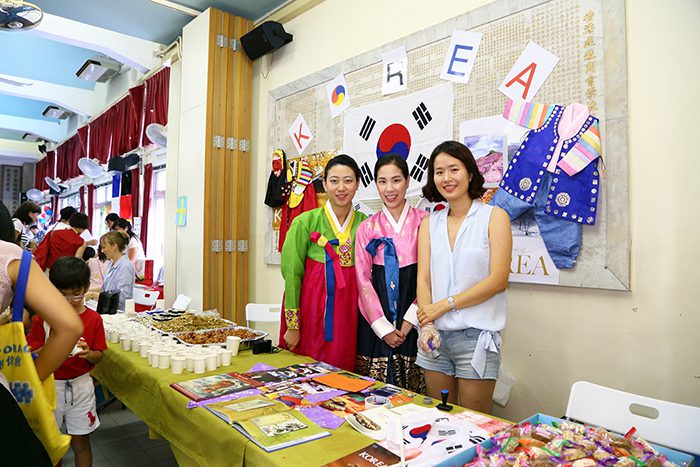
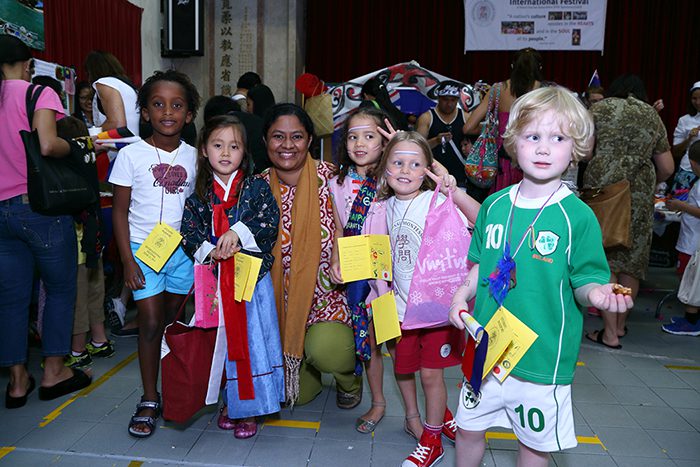
Each June, the IMS Community, supported by our Parent Teacher Association, hosts a joyous cultural gathering of our diverse community: the beloved International Festival. This chance to take a mini tour of the world in the school hall is always embraced by our children and parents alike.
Dressed in their own traditional attire, they get to experience some of the traditions that shape people’s lives both near and far. Our generous band of parent volunteers does a fabulous job to keep the cultural experience sensorially stimulating for our young tourists with an array of delicious cuisine samplings, treasured objects, hands-on crafts, colorful flags, and costumes, and even live performances! We are incredibly proud to be able to share some of the customs ascribed to 25 nations represented at this year’s event; from Peruvian music to Swiss raclette, Japanese fans, Dutch tulips, Maori kapa haka, Korean hanboks, and Indian dancing in silk saris!
To date, IMS’ multicultural community now stems from 46 countries. Our deepest appreciation goes out to our show-stopping volunteers from around the world! In addition, throughout the year, many of our Casa parents also present different holiday traditions that their family celebrates and share their experiences with the children; these cultural presentations help open up the 3-6 child’s awareness that even if we do not share a particular heritage, we often notice that, “We do that in our family too!” Time and again, what we find and aspire to pass on to our students, is that we are all alike. We all need and deserve a warm home. We all eat, sharing stories and laughs over food. We all love our children, hoping and dreaming for them, creating a wonderful world where they can grow into their best selves. We are special individuals; our culture and history can be shared, cherished, and celebrated. We are all humans who deserve respect, kindness, and love. About the International Montessori School (IMS)
Since 2002, IMS has pioneered Montessori Mandarin Chinese – English Dual-Language education in Asia and is now one of the largest Montessori programmes of its kind in the world. At IMS, we recognize and respect the individuality of every child, and aim to nurture their innate curiosity, compassion, and thirst for learning. Providing an environment that celebrates the child’s independence and fosters the motivation to become a lifelong learner who is flexible, responsible, self-regulating, reflective, and persevering is our goal. By equipping them with a solid academic foundation and a strong moral compass, we guide our students to become caring and contributing global citizens of the 21st century.
IMS opened its doors in 2002 with 68 students. With the growing appreciation of the benefits of this unique way of learning, today our Montessori community has grown to almost 900 students from over 40 different countries served in four campuses on Hong Kong Island.
Tomorrow’s Child / Nov 2018 / Pg 23
by Anne Courts | Adolescence, Brain Development, Children with Exceptionalities, Communication, Discipline, Empowerment, Infant-Toddler (0 to 3), Language, Lower Elementary (6-9), Mindfulness, Mixed Ages, Montessori Education, Montessori Parenting, Parent Education, Practical Life, Primary (3-6), Psychology, Sensitive Periods, Sensorial, Tomorrow's Child, Tomorrow's Child Online Issue
Thanks to my toy I feel save
Between 15 and 36 months old, in addition to physically increasing in size, toddlers are also learning to develop cognitively, emotionally, and socially. The development of their large muscles allows them to walk, run, and jump, while their small-muscle development helps them gain fine-motor skills, such as eating with utensils or learning to dress themselves. Their language and vocabulary increase rapidly. As toddlers are learning what they are capable of, frustrations in limitations may occur, as well as strong emotions resulting in temper tantrums, especially if they do not have the language needed to express their emotions.
As a toddler learns that he is an individual, separate from his parents and others, he may begin to experiment with boundaries, testing the way things around him work. Because so much is going on in the world of a toddler, both physically and emotionally, it is often difficult to determine whether a child is merely asserting his or her independence, or whether he or she might be facing a more extreme emotional or behavioral disorder. Toddler Montessori classrooms are inclusive environments, designed to allow toddlers of all backgrounds and abilities, including those with emotional behavioral disorders, to function together socially with the goal of functional independence for each individual child.
The Kid’s Mental Health Information Portal website informs, “During a child’s developmental years, they are constantly growing and changing. It is imperative to note that one must keep this in mind when diagnosing and treating emotional and behavioral disorders in children.” (Kid’s Mental Health, 2018). While there are several characteristics that might be linked to a child with Emotional Behavioral Disorder, or EBD, it is important to note that many of these behaviors in toddlers are temporary. It is when the behaviors persist over a longer period of time that we can begin to consider whether a child may actually have a mental health condition.
The causes of EBD are difficult to identify, and there may be several contributing factors, including biological factors, the child’s family and home environment, as well as the child’s daycare or school. When talking about EBD, there are two ways behavior is classified: internalizing and externalizing. A toddler with internalizing EBD is harder to detect, but the child may demonstrate tremendous stress and separation anxiety when separating from a parent or guardian, cry very often and for long periods of time, have difficulties with transitions, be easily distracted, or be unable to focus on an activity. The child may also show excessive clinginess with adults or extreme anxiety when around new people or situations, and might have little or no interest in playing with peers. Social anxiety disorder is a condition in which a person feels so much anxiety about a social situation or the possibility of embarrassment or humiliation that the event becomes fearful and threatening. For a toddler, this social situation could be a school or daycare, or even unfamiliar people visiting the home.
A toddler with externalizing EBD might fail to follow rules or listen to directions, be argumentative with adults and peers, and may exhibit overly aggressive behaviors such as temper tantrums which may include hitting, biting, scratching others, pulling hair, and slamming or throwing objects. The child may have extreme bursts of energy, be hyperactive and impulsive. Oppositional defiance disorder is a condition where a person is very easily annoyed, angry or resentful, quarrelsome, loses his temper, blames others for mistakes, and refuses to abide by rules. A toddler may show these symptoms as he tests limits and boundaries, but a persistent display of these aggressive behaviors, with more than one person, could possibly be linked to EBD.
On a daily functioning basis, a toddler with either internalizing or externalizing EBD may have difficulties in learning to use the toilet or refuse to use the toilet. He may also refuse to eat or sleep, or have trouble sleeping, waking up several times throughout the night. All of these characteristics of EBD cannot be explained by intellectual, sensory, or health factors, and can impact a toddler’s ability to learn and function in his daily activities.
Toddlers with Emotional Behavioral Disorder struggle with behavior challenges, social skills, and academics. Their behaviors often demand the full attention of their parents and teachers, interrupt classroom lessons, and impact their relationships with other children. They often struggle with self-control, are unable to work together with peers, and cannot effectively express their needs. A child with internalizing EBD might avoid peer interactions, while a child with externalizing EBD might act out his frustrations aggressively, using physical violence or by intimidating peers.
Although Emotional Behavioral Disorder can create barriers in the daily lives of children, there are strategies in which parents, families, teachers, and caregivers can use when assisting toddlers and helping them manage their extreme feelings of anxiety, depression, anger, as well as aggressive behavior. Rules and expectations should be simple and clear enough for the toddler to fully understand. Acceptable social skills and language should be consistently taught, demonstrated, and modeled to toddlers. For toddlers who enter into power struggles with adults, the adults can help the toddler feel empowered by providing choices where either choice is acceptable. This offers the child an opportunity to assert himself, and to have a sense of accomplishment. In schools, small-group-instruction might help a child with social anxiety feel less intimidation by others and might also give a child demonstrating aggressive behavior more opportunity for one-on-one individualized interaction from an adult and the adult can closely monitor that child, offering support and feedback. The adult should show compassion and be responsive to the child’s individual needs. The child should always have opportunities to respond. The child with EBD should also be able to take rest periods or breaks from tasks as needed.
Today, because toddlers are now spending more time together in early care and learning settings with other toddlers, it is important to have a focus on both the social and emotional learning of children, in addition to academics. In schools, PBIS, or Positive Behavioral Interventions and Supports, is a system of supports that provides functional assessments and individualized support for children based on evidence of child behaviors. If parents or teachers are unsure of whether their toddler is showing signs and symptoms of EBD, but behaviors have persisted for a considerable length of time, there are websites such as www.understood.org that offer questionnaires to help identify behaviors, as well as suggestions, resources, and other outside supports to help determine the child’s individual needs.
Montessori toddler classrooms are designed to meet the educational and developmental needs of the individual toddler. Because they are seeking independence, toddlers often want to do everything for themselves but have not mastered the skills or been provided with the proper tools to be fully successful. This can be very frustrating for them, and strong emotions often emerge. In the Montessori toddler environment, everything is at the child’s level and accessible, and all materials are toddler-sized. Once given a lesson, the child is free to choose the material he would like to work with. With freedom and self-discipline, the child feels a sense of accomplishment and an increase in self-confidence and self-esteem.
In a Montessori classroom, a toddler with Emotional Behavioral Disorder would be granted freedom of movement around the classroom, freedom to choose his own activity, and space in which to work. The child could choose whether or not to participate in social activities or to work by himself. Because the classroom guide works with the toddlers on an individual basis, the guide would have more opportunities to observe that child on a one-on-one basis, determining that child’s individual needs, as well as new materials to be brought into the classroom to best serve that particular child’s needs. Montessori toddler classrooms include areas of practical life, such as self-care and care of the environment; self-expression through drawing and painting; language in the form of objects and language cards; manipulatives used for fine-motor development; and food preparation. Language materials, manipulatives, and food preparation activities are rotated on a regular basis to keep the children’s interest as well as to introduce new concepts.
A Montessori toddler guide could work with a child with EBD in each area of the classroom to help that child feel heard and understood. The child can learn a language with cards and objects needed to express what he is feeling, use art materials to express himself, focus on taking care of himself and his environment and prepare his own food, which can increase his sense of accomplishment and confidence. These activities build strength in eye-hand coordination and fine-motor skills to help him complete tasks with his hands.
Montessori toddler guides consider what contributes to a toddler’s frustration (such as not being able to have access to materials, or materials being too big to use) and design their classrooms in order to best support him. With fewer daily frustrations, a child with EBD could feel more heard, understood, and supported.
Maria Montessori wrote:
“Let us always remember that inner discipline is something to come, and not something already present. Our task is to show the way to discipline. Discipline is born when the child concentrates his attention on some object that attracts him and which provides him not only with a useful exercise but with a control of error.”
(Montessori, 1949)
Inclusive Montessori toddler environments are intended to offer every child, including children with Emotional Behavioral Disorder, the individualized attention, opportunities for choice, self-expression, and support necessary to guide the child in creating his own self-discipline and to discover his own greatest potential.
Tomorrow’s Child / Nov 2018 / Pg 15
by Edward Fidellow | Adolescence, Communication, Early Adolescence (12-15), Empowerment, Infant-Toddler (0 to 3), Later Adolescence (15-18), Lower Elementary (6-9), Mindfulness, Mixed Ages, Montessori Education, Montessori Family Life, Montessori Parenting, Parent Education, Psychology, Tomorrow's Child, Tomorrow's Child Online Issue, Upper Elementary (9-12), Young Adolescent, Young Adults
Father And Young Son Reading Book Together At Home
There are seven simple steps to becoming a Montessori parent. When we say ‘simple,’ we don’t mean that they are not challenging. It is a lot like the definition of bull riding. “The object is to keep the bull between you and the ground.” Simple—but challenging.
The first step to becoming a Montessori parent took place when you enrolled your child in a Montessori program.
That in itself is a challenge. Most of us weren’t raised in a Montessori school. The whole concept is foreign and takes a bit of courage to step out of the norm and our comfort zones. We may have chosen the program because it wasn’t like our school experience (which is why we chose it). Or we chose it because we saw something unique in a Montessori child that we knew. Or we were just plain lucky, stumbled into a Montessori school, and were fascinated by what we saw. Even then, we had to deal with the question, “If this is so great, how come the whole world isn’t lined up outside the door to enroll?” (That is the same question Montessorians wonder about, too!) But you made a complex and challenging decision to become a Montessori parent, and here you are. So how do you get the best out of your decision? You go to step two.
You begin to understand the core philosophy of Montessori. Fortunately, you don’t have to become a Montessori teacher to be a good Montessori parent. (You don’t have to know how to manipulate all of those materials, and you don’t have to keep fifteen children from climbing the walls.) The most significant Montessori concept is to respect the child. I can almost hear the wheels turning: “Of course I respect my children; I love them very much; that’s why I have them in Montessori; I want the best for them.” Of course, you love them, but respect is different.
Respecting the child is, first, to respect the nature of children. Children are not mini adults waiting to be molded. They are like tadpoles and caterpillars that have their own form and function of life, waiting to become what they are intended to be. We are often impatient for them to ‘become,’ because we don’t realize that childhood (with its curiosity, playfulness, messiness, and all) is part of the process of them transforming themselves into the adults they will become. We have to respect that process, which doesn’t mean they always get to do what they want.
One of the operative words in Dr. Montessori’s writing is the word ‘train.’ We do need to train our children, but we need to train ourselves not to destroy that which is good in the nature of our children. The second part of respect is to respect the personality of your child. Your child is not a blank slate. They are already imbued with the unique characteristics of who they are. The artistic bent is already there. The math bent is already formed. The leader, the follower, the giver, the taker, the extrovert, the introvert are already present in your children’s DNA. Right or left-handed; right or left brained are already formed.
So how do you cooperate with nature? You become an observer. That is the next step in becoming a Montessori parent; you train yourself to observe. To what interest does your child gravitate? What gives them great joy? What occupies them endlessly? These are all clues to who your child is becoming. You are fortunate that you have a trained helper in your child’s Montessori teacher. At your next parent conference, you should ask more than “what has she done?” but who do you see her becoming. It is hard to cooperate with nature if you are not aware of the nature of your child.
Our third step is to become their champion. I know. I hear you say, “Of course, I’m their champion. I love them.” And you do. But are their goals your goals? Translation: Do you have goals for them that do not take into account who they are? (There are many ‘jock’ fathers who do not have ‘jock’ sons.) Yes, you have many wonderful goals for them to be caring and loving, honest and faithful, upright, truthful, etc. These are worthy, significant, and meaningful goals; however, the expression of their lives (career, vocation, work) is best met and fulfilled according to their gifts.
When your five-year-old says, “I want to be a fireman.” He may be reflecting the latest book or television program he’s seen. However, if you continue to ask the why questions: “Why do you think that would be a good job? Why do you think that you would enjoy that?” you may discover that your child is not drawn just to the excitement but to the fact of wanting to help people or, perhaps, he likes the aspect of being part of a team. All are important clues to his personality. Your child needs you to champion and encourage his personality (especially, if it is different than yours.)
The fourth step is to practice what they learn at school: grace and courtesy. Please and thank you, May I, Excuse me, Please forgive me, and a host of other considerations practiced (and modeled) at home will go a long way to giving your child every advantage in life. People respond favorably to a child with great manners.
Fifth, practice independence. Independence is the ability to be self-governing, and that comes from making choices, living with the consequences, and having responsibilities. As often as possible, give your children choices. “What do you want for breakfast, cereal or eggs?” (Don’t offer choices where there are no choices. “Do you want carrots? They say no and you serve them anyway.) Give your children chores they can accomplish: making their beds, putting dirty clothes in the laundry, dishes in the dishwasher, etc. Chores build responsibility; responsibility builds independence; independence builds confidence.
Sixth, give them the gift of time. Give them time to accomplish their chores. Give them time to be children. Give them time to breathe. Give them your time.
Seventh, practice humility. They have a lot to learn from you. What is easy for you as an adult is mystifying and beyond challenging for them. Let your words be seasoned with grace. Look for the good in what they do. Their motives are often pure; their actions imperfect. Yet, we have a lot to learn from them. And when you are wrong (when not if) practice the humility of saying, “Please forgive me.” It will not destroy your authority or their respect for you. It will teach them one of the great lessons of life: when you fail, whether it’s in a relationship, school, career, or life, own the failure and start over again to succeed another day.
Becoming a Montessori parent is to become the best parent you can be.
Reprinted with permission by the author.
Tomorrow’s Child / Nov 2018 / Pg 13
by Cassi Mackey | Communication, Empowerment, Maria Montessori, Mindfulness, Montessori Education, Montessori students, Montessori Teachers, School Leadership
Friends Working Discussion Meeting Sharing Ideas Concept
Values are our guiding principles. Being a Montessori leader means we participate in values-based leadership, which should be our aspiration. Working toward values-based leadership involves a continuous self-improvement process: thinking about Montessori values; considering how they should shape our behavior, actions, and communications; reflecting on if we are in alignment with Montessori values on a day-to-day basis. The goal is for these values to be evident in everything we do and say.
As Montessorians, we are asked to model the behaviors, ideals, and personal qualities that reflect the essence of Montessori. We present, intentionally and consistently, our best self to the children. However, when we give our children lessons on peace, acceptance, honesty, collaboration, and kindness, can we honestly say that we live these values every day? We teach more of who we are than what we know; therefore, one must pose the question: do we practice what we teach? One must examine: do we give our best self to our colleagues? And, for those in certain critical positions, a key inquiry arises: is our leadership rooted in the same essential call to live Montessori?
As educators, we are drawn to the Montessori pedagogy because we are seekers of light. There is a place in the heart of the world that holds the light of all the children. We work together as long as it takes to keep the light safe and burning. This vocation will always be so for a Montessorian. We protect the light of a child.
Maria Montessori knew about this place in the heart and recognized the light of a child and the importance of always keeping it safe, because “the child is both a hope and a promise for mankind.” Our work is essential to fulfilling this promise. To keep this assurance, Maria Montessori asked us to rise up to our highest self in order to guide our children: “A guide must acquire a moral alertness, which has not previously been demanded by any other system, and this is revealed in the guide’s tranquility, patience, charity, and humility. Not words, but virtues, are the main qualification.” We must rise up to these virtues every day, for our children, because this is our purpose and our calling.
While we tend to align ourselves with the Montessori tenets for our children, we do not always remember to do so when interacting with our colleagues. We forget to protect their light. Although working with children often requires highly developed emotional skills, we don’t always use our emotional intelligence to navigate our relationships with each other. We have to rise up and do better for ourselves and for our colleagues. We need to examine how we interact with each other and assess if it is in alignment with the “moral alertness” Maria Montessori requests of us.
Does our own behavior with our colleagues live up to the standards we ask of our students? Does our behavior lead to deep and sustainable improvement not only for our students but also for our colleagues and ourselves?
To build healthy, thriving communities steeped deeply in Montessori beliefs, it is imperative to build the container that will have the space to hold the light of all involved. This building process starts with the school’s leadership. As school leaders, we must have the ability to identify and reflect on what we want our community to stand for, what our values are, and what matters most to us. We have to be willing to constantly assess whether or not every aspect of the community is truly “living Montessori.” A great part of this assessment is based on the leader consistently considering all outlooks and opinions with an open mind, not taking sides. Then, as school leaders, we need to also enhance the capacity within our communities to see situations from multiple perspectives and divergent viewpoints to gain a fuller understanding.
Once that foundation is set, it aids another of the most essential components to healthy communities… our ability and willingness to put effort into developing healthy relationships with our colleagues. This process can only happen if we engage in Courageous Conversation. Conversations are considered “courageous” when the participants are able, in a safe environment, to reveal the beliefs, as well as check the cogency of the assumptions, that drive their actions, feelings, and views. By being curious and open to not only the behaviors and actions of colleagues but also the beliefs that lie behind the behaviors, leaders are demonstrating respect. Taking the time to acknowledge, discuss, and understand why colleagues act as they do paves the way for suggested alternatives that benefit both parties. Engaging in Courageous Conversation fosters growth through respectful dialogue by listening to and acting on feedback and providing action that will lead to positive, fruitful change.
Facilitating Courageous Conversation is incomparable in its impact over whether or not we can affect deep and lasting improvement, and, as part of that process, build a school-wide culture of trust and respect. In turn, our community becomes a place in which change and improvement are welcomed and embedded in daily practice. Without Courageous Conversation, we may be able to have a well-functioning school and affect change on the surface, but deep and lasting change will be almost impossible.
One of the first steps to creating a culture of open, honest communication is to eradicate venting. Venting is often the quickest way to extinguish a colleague’s flame. We may have a false belief that venting is helpful and healthy. It is neither. Venting is a more acceptable label for gossip. Trust is a crucial ingredient of healthy partnerships, and talking behind someone’s back to another colleague gradually destroys the trust, faith, and confidence essential for community health. It is damaging, unnecessary, and doesn’t live up to the tenets of Montessori and who she asks us to be for our children.
We must rise up and create communities where the expression of honest concerns is expected, required, and desired by everyone involved to support a collaborative spirit while protecting the light of all. It is the self-inculcation of Montessori values into our life, our spirit, our natural way of being that, in time, makes us a leader, a beacon, that others seek to follow. May our communities be a sacred space where the light of an individual is honored, nurtured, and protected.
ML / September 2018 / pg 28
by Lorna McGrath | Adolescence, Communication, Early Adolescence (12-15), Emotional Intelligence (EQ), Later Adolescence (15-18), Lower Elementary (6-9), MFA, Mindfulness, Montessori Family Life, Montessori Parenting, Peace Education, Primary (3-6), Upper Elementary (9-12), Webinars / MFA
How many times have you heard an adult say to an upset child, “Calm down,” “Just relax,” or “Pull yourself together. It’s not so bad”? Children are not born knowing how to calm themselves when they get emotional. Self-regulating our emotions is a skill to be learned. In part 1, Lorna will define learning styles and help make the connection between the way that we learn with the way that we self-calm. In part 2, she will share how to create a place for each family member when they need get calm, what activities to put in, when a family member should go there, and how to get them there.
by Lorna McGrath | Book Reviews, Empowerment, Mindfulness, Montessori Family Life, Reading, Tomorrow's Child, Tomorrow's Child Online Issue
Joy Fixes for Weary Parents
by Erin Leyba, PhD
This book is for anyone who is caring for and nurturing a family at any age along the way. It is easy to pick up and read one or more of the 101 ideas for building and sustaining relationships. Each of the ideas is two to three pages long, starting with a general description, then giving a real example of the idea in use, and ending with “TRY THIS.”
Some of the “fixes” will be just what you needed and others won’t appeal to you. Dr. Leyba has laid out sections that hold 11 to 15 ideas. Here are a few of the section titles: Design a Life You Love; Follow Your Intuition, Inspiration, and Truth; Ground and Center Yourself; Embrace the Quiet, the Slow; and the Simple; Build a Joyful Relationship with Your Partner; Build a Joyful Relationship with Grandparents; and more. There’s something in this book for everyone.
There is no particular order that you must read them. Just open the book and find one or two or more that fits your circumstance or mindset at the time. We all need a boost or a new way to look at things in family life, and Dr. Leyba has filled that bill with ideas for joy building. I recommend that you get this book and put it on your reading table or your nightstand so it’s handy for you to pick up and read a little whenever you have a minute.
Tomorrow’s Child/ September 2018/ Pg 30